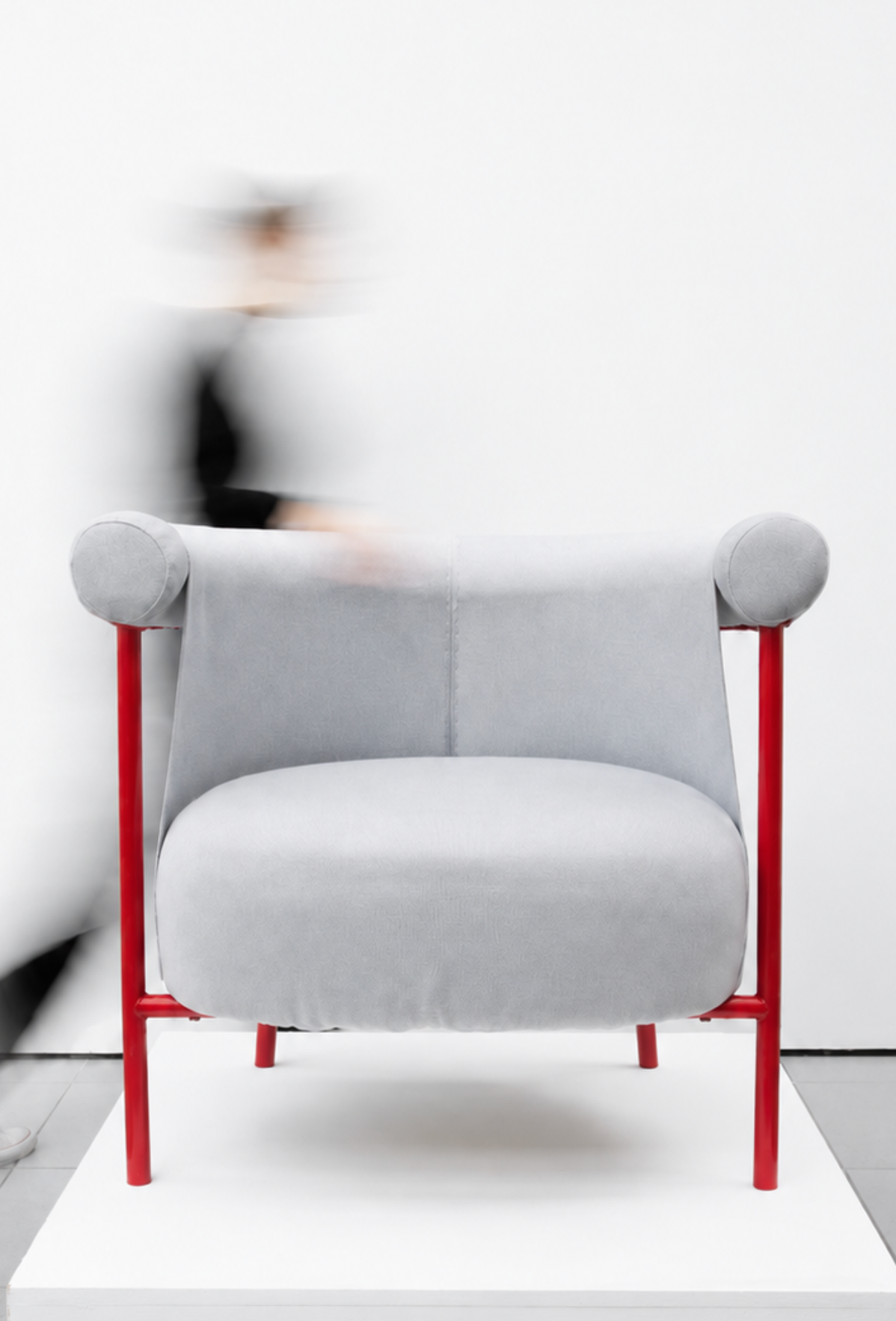
The Lorca Chair is contract lounge seating that moves. Designed for hotel lobbies, hospitality spaces and workplace breakout areas, it is built around a springbased rolling mechanism that allows the body to shift, tilt and rebalance freely in any direction, responding to the sitter rather than correcting them. The upholstery is a hand layered stack of natural latex, cocolok and needled wool. The cover is a seamless WHOLEGARMENT 3D knit by Camira, fixed to the frame at nine points without tools and designed to be replaced independently when needed. The frame is exposed tubular steel, left visible at every junction.
Every material was chosen because it performs honestly and recovers cleanly: no polyurethane foam, no synthetic wadding, and no components that cannot be separated and renewed. But the deeper design argument is about movement. This is a chair that refuses the assumption that rest requires stillness and proposes that the body has always known how to sit. It just needs furniture that gets out of the way.
Galen Cranz's The Chair reframed the project early. Her argument is simple: the conventional chair is not a neutral object; it's a cultural assumption repeated until it feels like fact. The body was never designed to hold a single position.
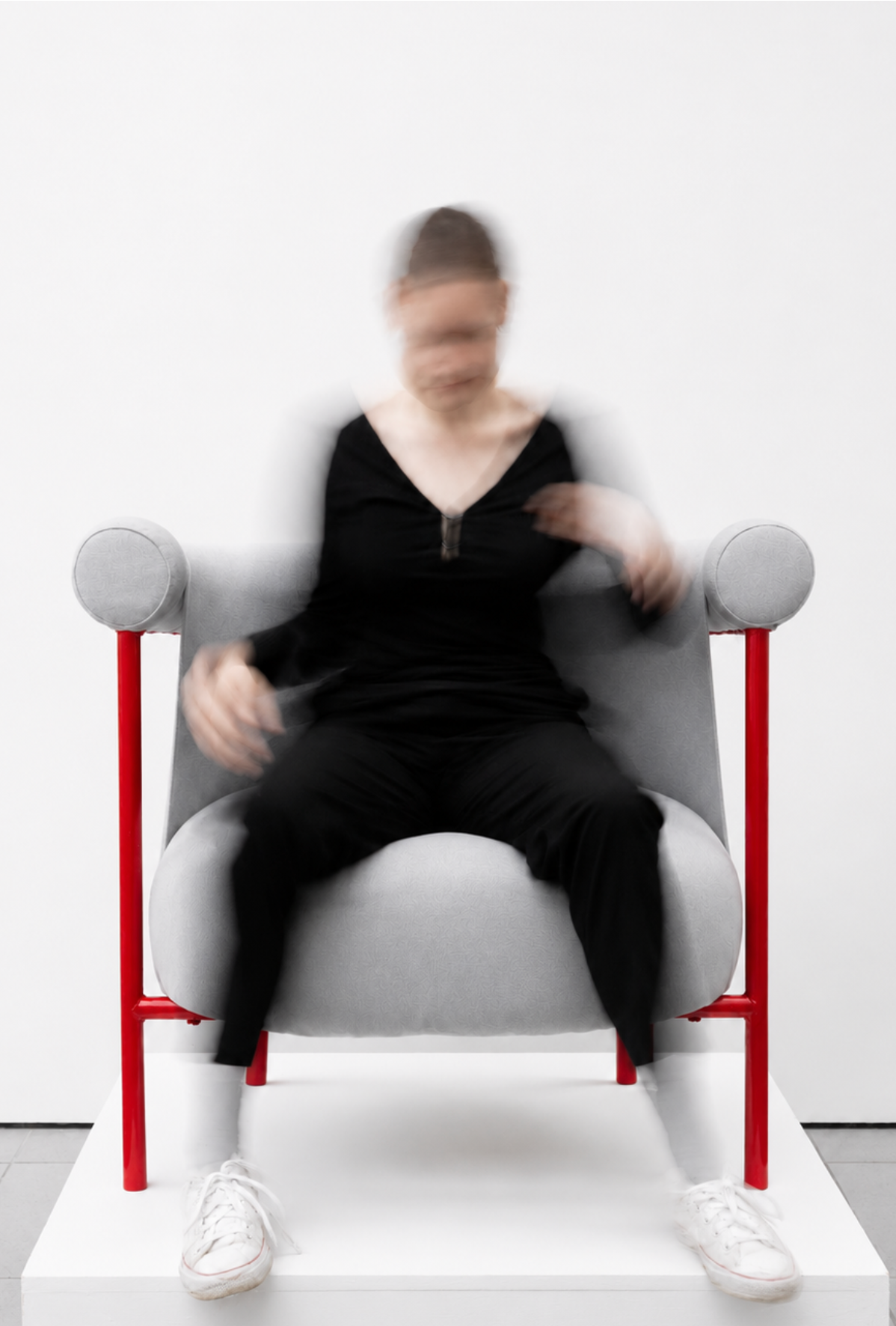
User testing confirmed it immediately. Without exception, everyone who sat in my prototypes shifted, crossed their legs, leaned, and tucked a foot under themselves. Nobody sat still, and yet the lounge chairs specced into hotels and workplace breakout spaces still ask the body to do exactly that.
The research is clear: it's static posture, not the sitting duration. This is most strongly linked to chronic back pain. 619 million people live with low back pain globally, rising to a projected 843 million by 2050. The industry's response has largely been softer cushions. The premise has gone unquestioned.
The Lorca Chair questions it. Contract lounge seating is designed to work with the body's instinct to keep moving, because genuine rest has never required stillness.
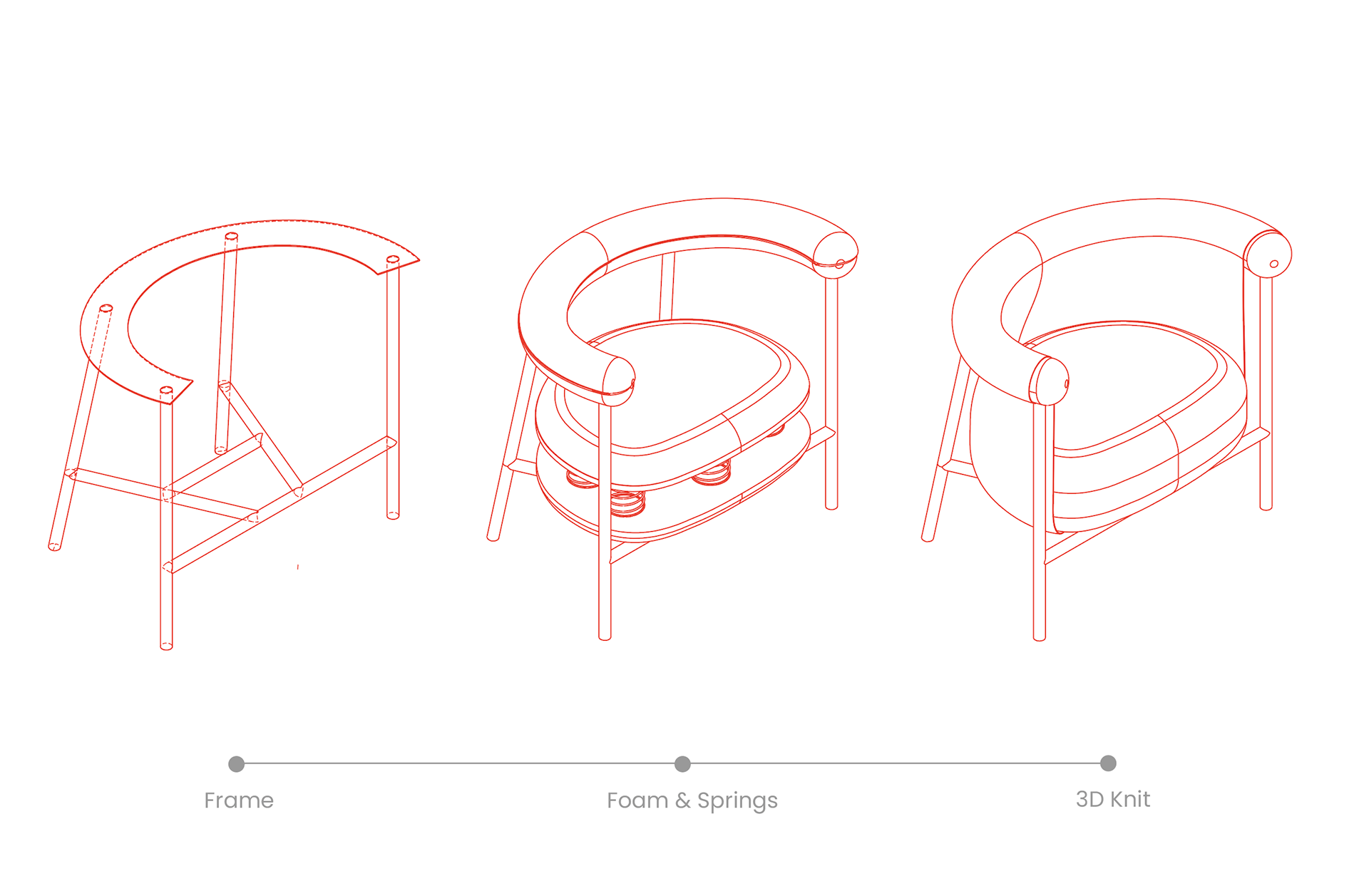
A tubular mild steel frame was chosen for strength, minimal profile, and honesty at the joints. 100% recyclable without quality loss; recycling uses 25–30% of the energy of new production and saves 1.67 tonnes of CO₂ per tonne.
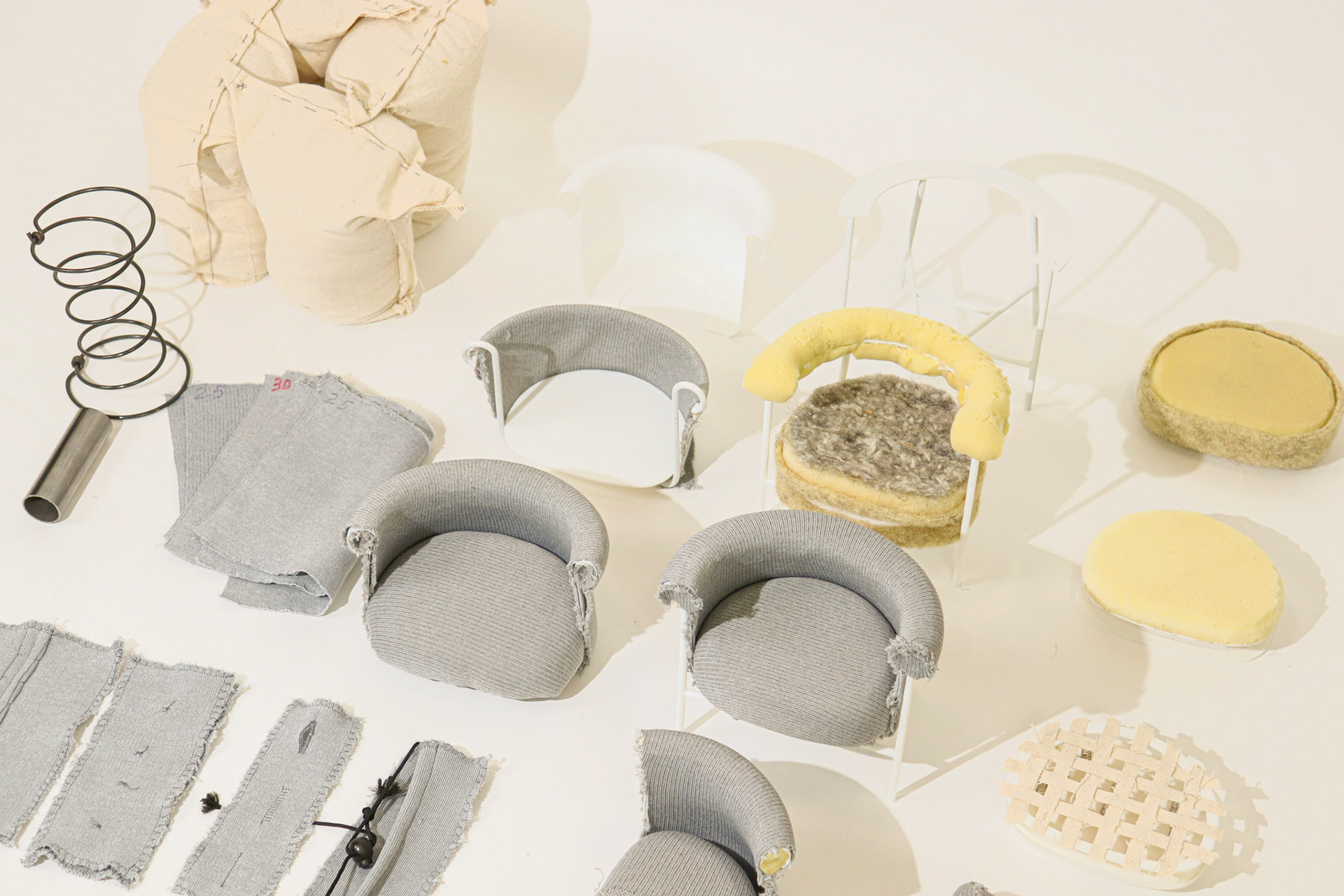
Natural latex, cocolok, needled wool create an upholstery stack. Polyurethane foam was replaced entirely. It's fossil fuel derived, non-biodegradable, and 49% ends up in EU landfill. The natural stack biodegrades, performs better over time, and eliminates chemical flame retardants.
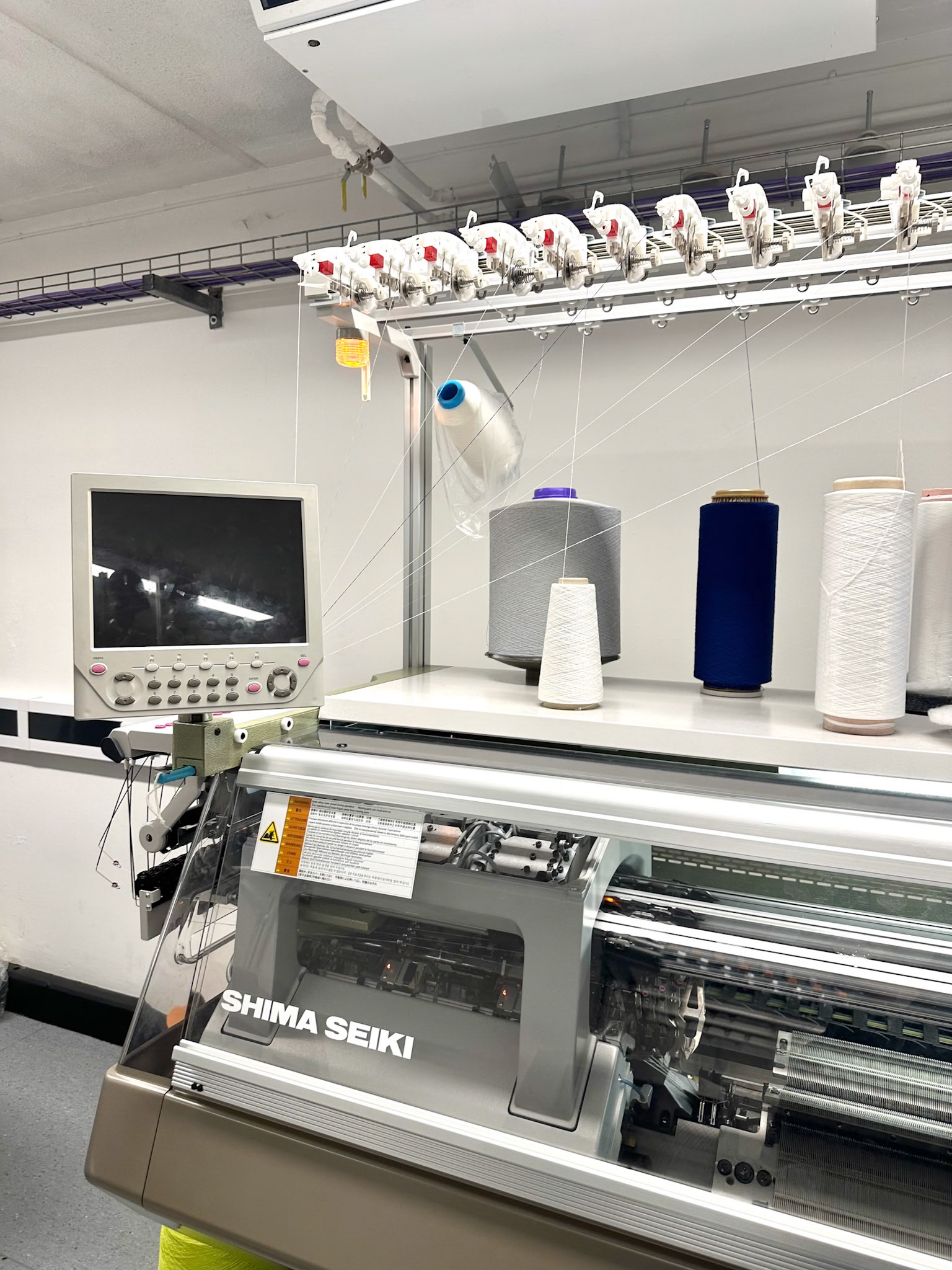
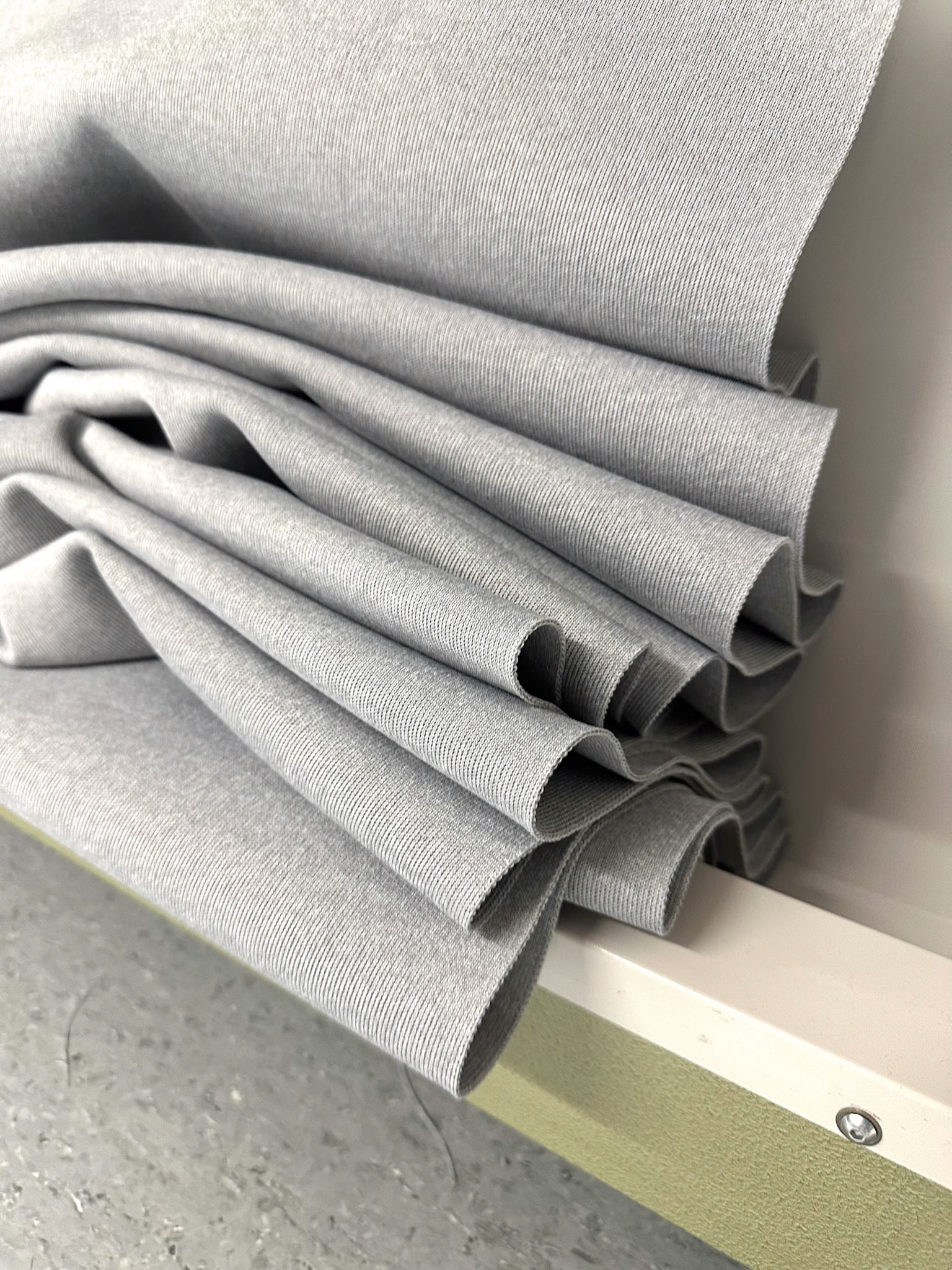
Camira ShrinkKnit WHOLEGARMENT 3D knit cover was used instead of traditional upholstery, which typically wastes 10–20% of fabric. Made as a single seamless piece with no cutting required, it reduces waste to less than 1%. The cover attaches toolfree at nine points and can be replaced in minutes without dismantling the chair.
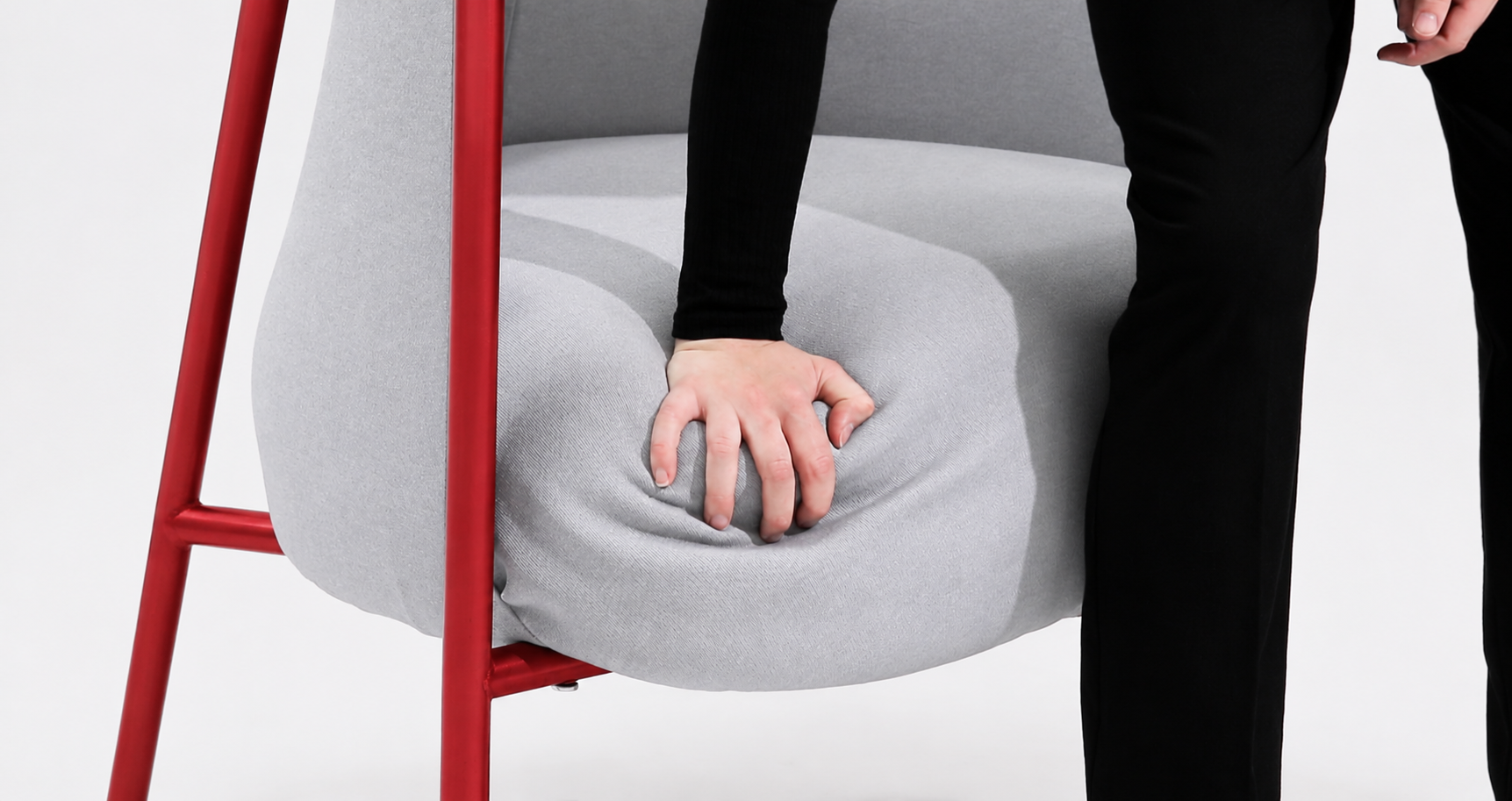
Most lounge chairs fix the body in place. The Lorca Chair does the opposite. Eight gauge coil springs beneath the seat pan allow the base to tilt and travel in any direction in response to shifting body weight.
When weight moves: a crossed leg, a lean forward, a twist to talk. The springs compress unevenly, and the base follows. In a conventional chair, that shift is resisted; the body absorbs the tension. Here, the chair moves with it.
Gauge was determined through prototyping: Ten gauge coil springs were too stiff to register natural postural shifts. Eight gauge provided the right resistance: supportive without dampening the responsiveness that makes the movement feel intuitive rather than unstable.
The chair reads as still until it's sat in. The movement isn't demonstrated. It happens without thought.
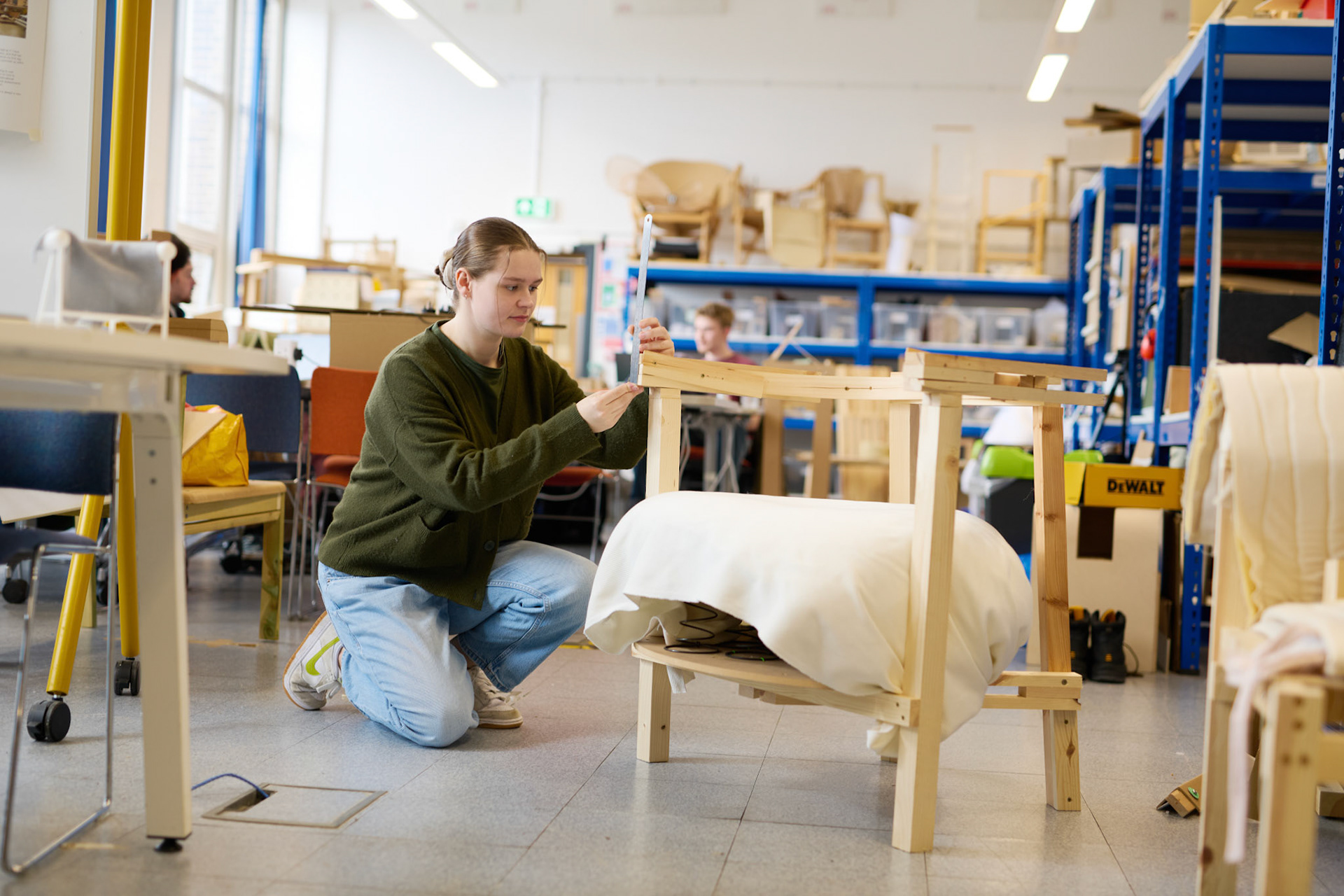
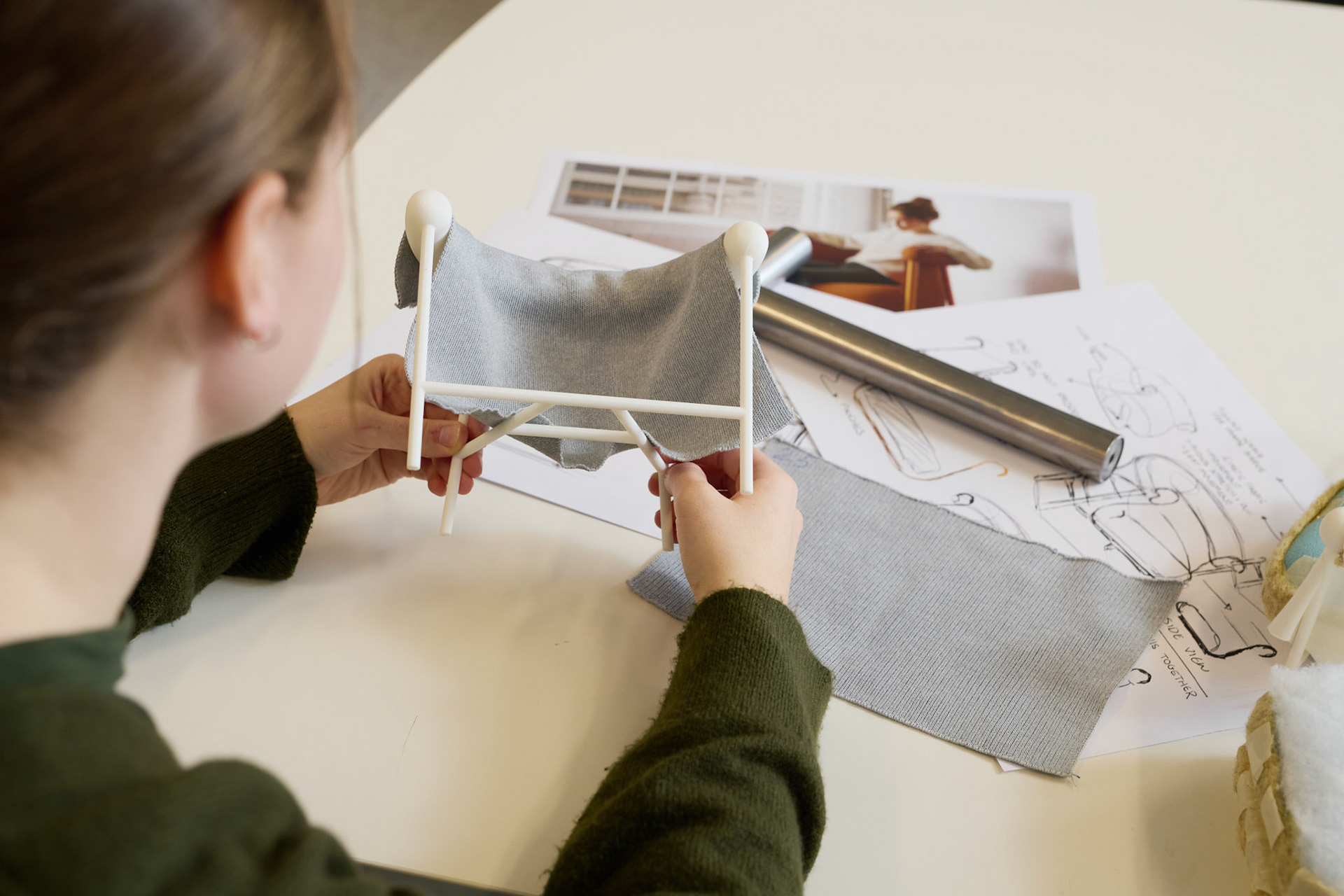
Throughout the development of The Lorca Chair, I prioritised a making led approach, working directly with physical materials at full scale from an early stage. The 1:1 pine prototype was the most important object in the process. Built to be sat in, measured against and rebuilt rather than preserved. It forced decisions that smaller models couldn't answer, like seat height, arm geometry, and the exact position of the spring fixing points, and made problems visible that drawings had concealed.
This approach brought both clarity and constraint. Building at full scale gave immediate feedback on proportion and structure, but the commitment required meant early stage alternatives were sometimes underdeveloped before a direction was set. In future projects I would combine this method with a more rigorous sketching phase, using 2D exploration to stress test ideas before committing material and time to a full build.
The pine frame also became an unexpected user testing tool. Participants sat in it before any upholstery was applied, responding to structure and movement alone. That rawness made the feedback more useful, not less.
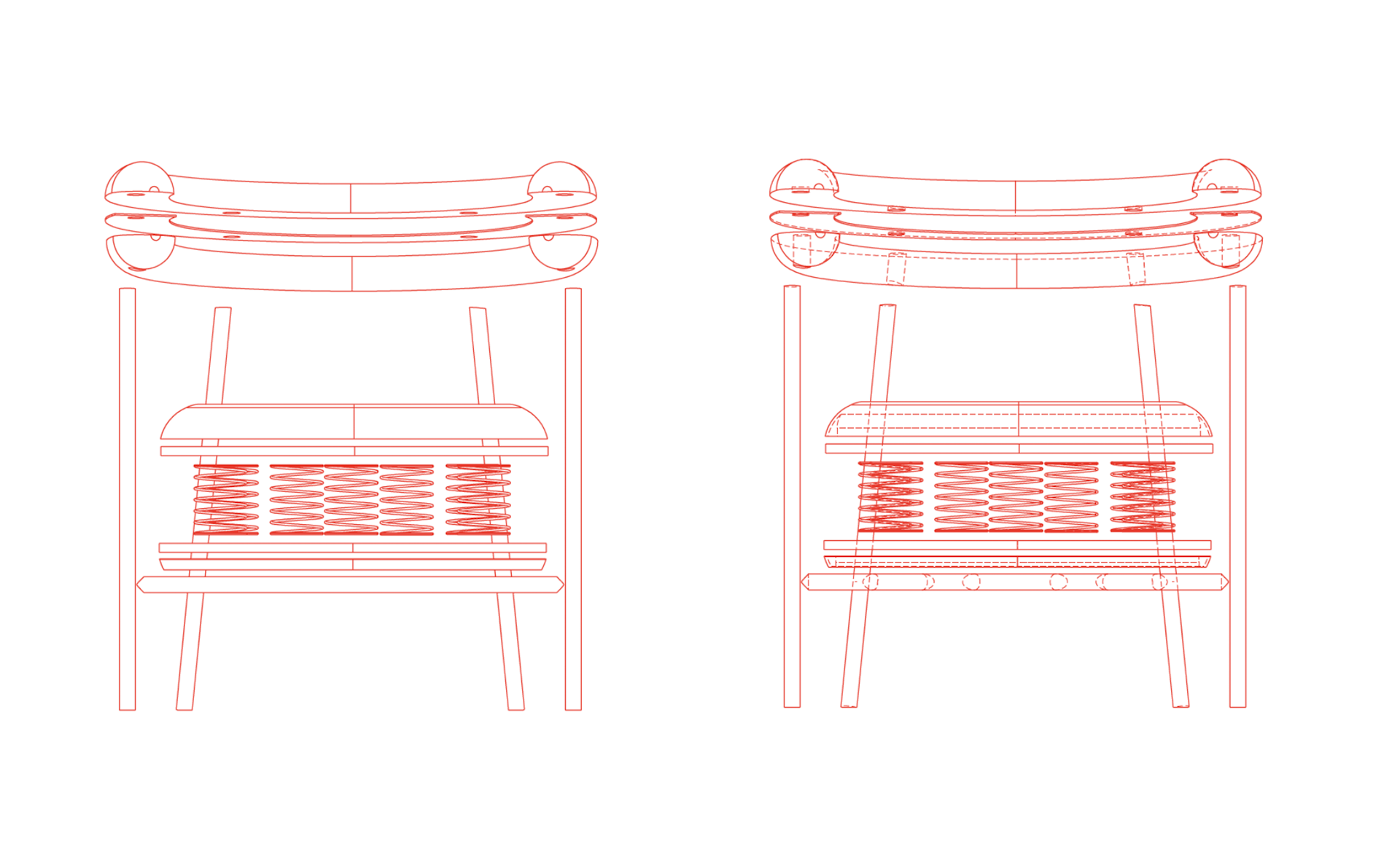
The omni directional response comes from a cluster of eight gauge coil springs mounted beneath the seat pan. No mechanism to engage, no setting to adjust. The movement is a direct consequence of the structure.
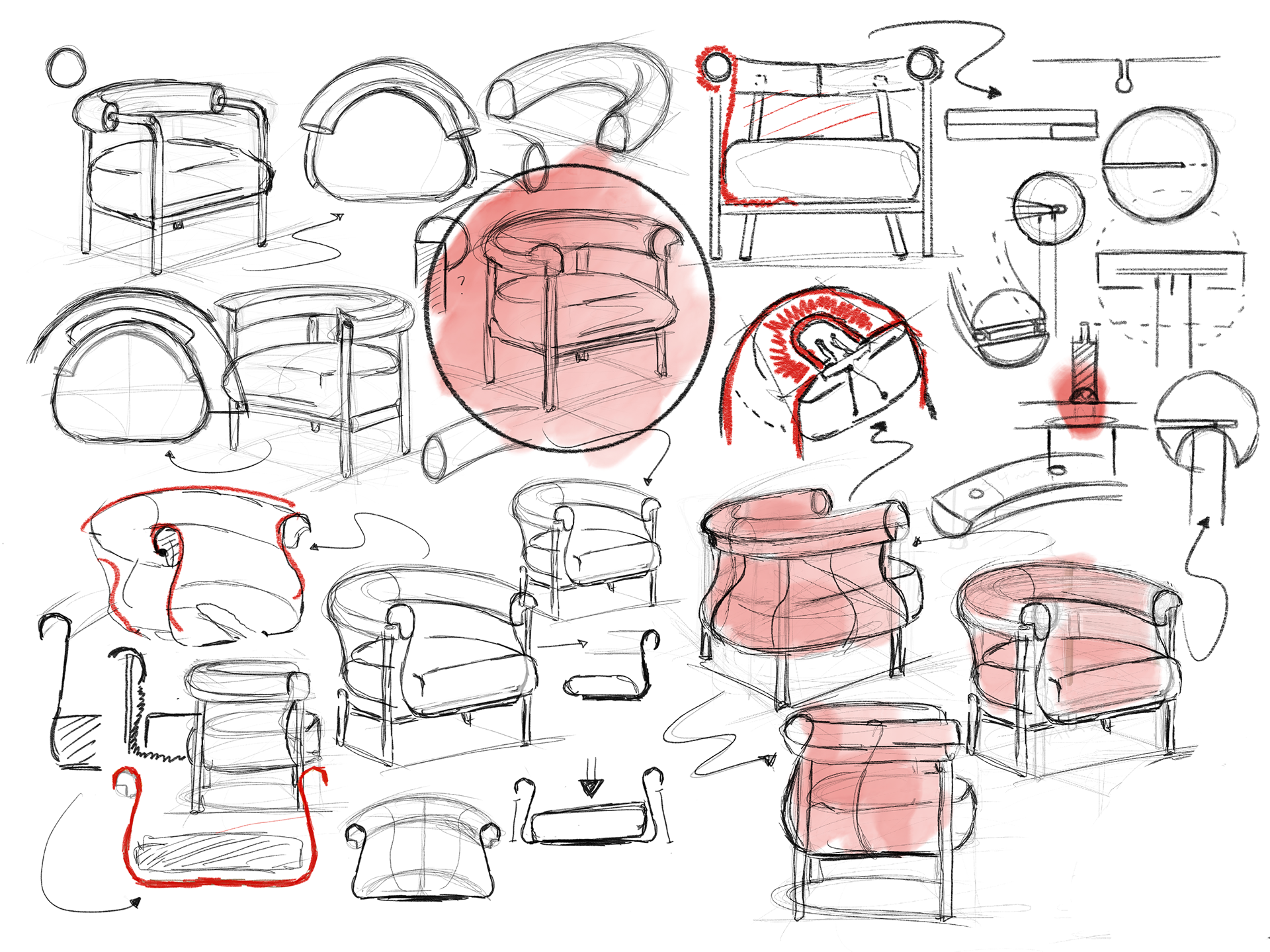
Every iteration on this page is asking the same question from a different angle: what should a chair look like when the base never stays still? The sketches weren't exploring style, they were testing whether different shell shapes, arm heights, and seat depths would work with the movement or fight it. Deep wrapped forms grounded the sitter too much. High backs created resistance through the spine. Low, open geometries with a clear seat shell kept coming back as the direction that let the body respond freely without feeling unsupported. Form followed behaviour, not the other way around.
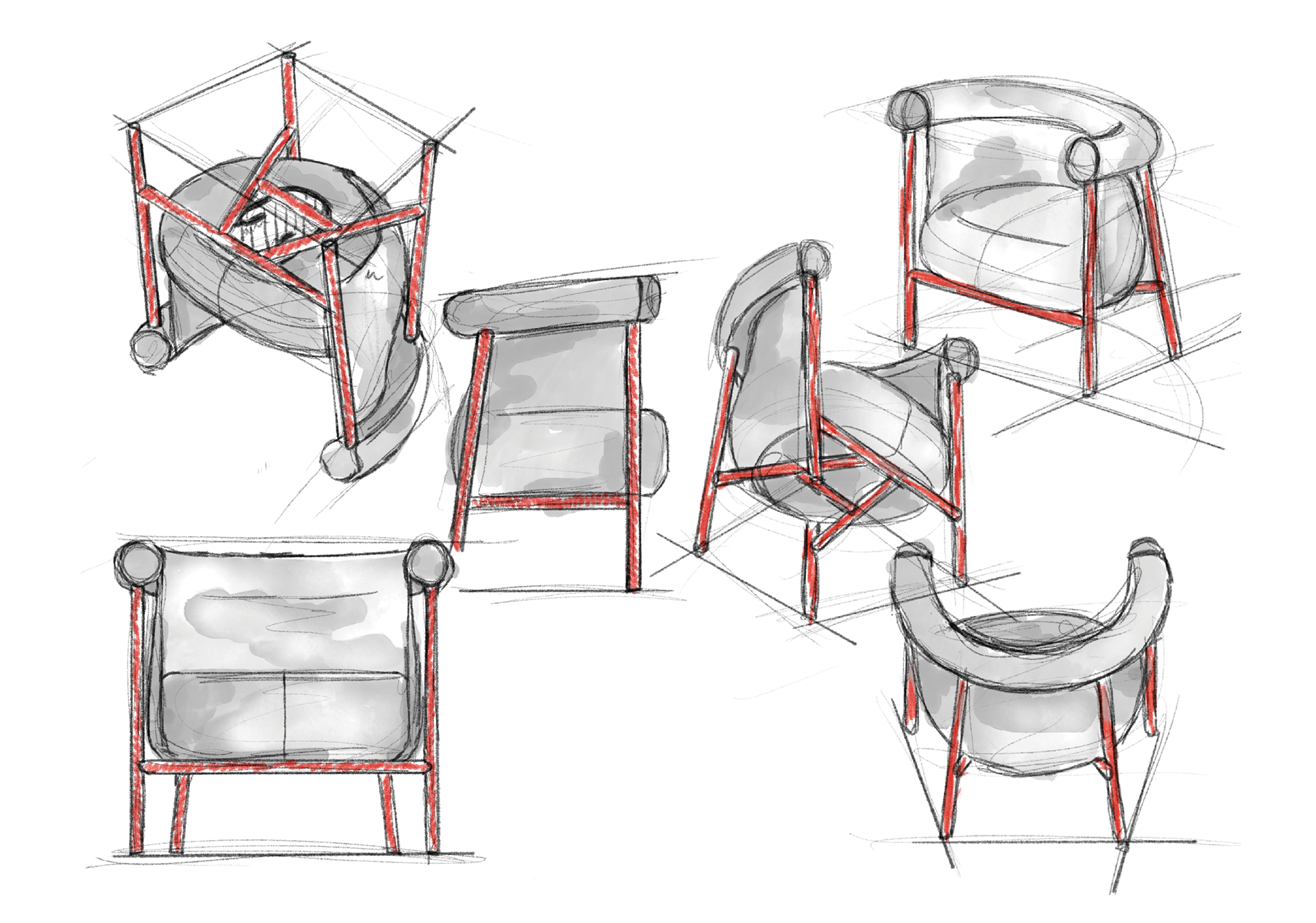
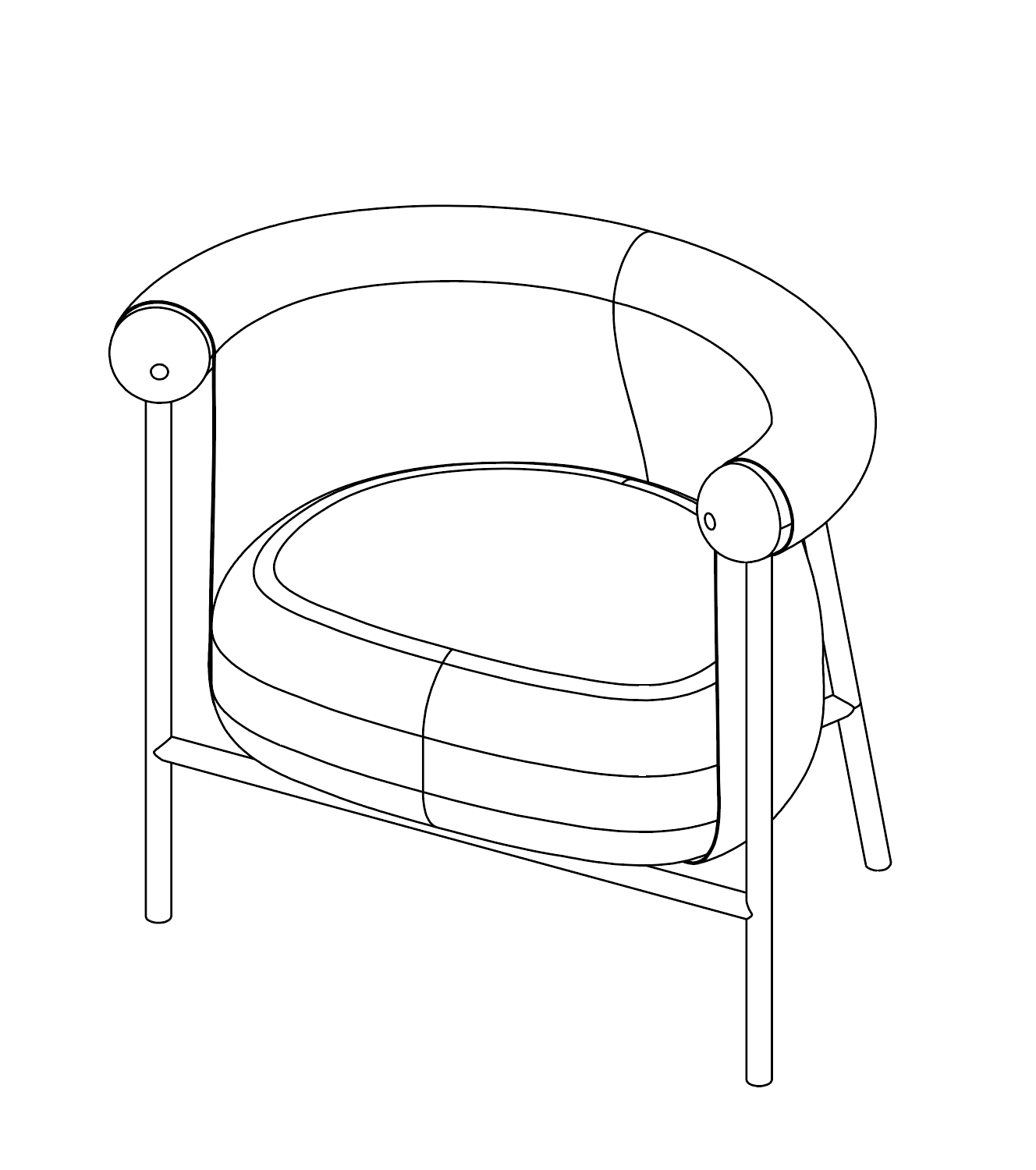
By this point the form had settled. These sketches were about understanding what I'd arrived at rather than pushing further. Drawing it from every angle to check it held up, that nothing looked unresolved from behind or overhead that had seemed fine from the front. The continuous back rail, the way the seat shell sits within the frame rather than on it, and the detail at the arm ends; these weren't decisions I made all at once. They accumulated. Looking back at these drawings now, what strikes me is how much the frame ended up resembling the movement it was designed around. Round, open, nothing closed off.
The contract lounge market is a well supplied category. Manufacturers including Vitra, Allermuir, and Humanscale produce seating that is aesthetically resolved, commercially viable, and meets the demands of hotel, hospitality, and workplace environments. What the category has not addressed is movement. Every product in it, regardless of how considered its upholstery or how refined its form is, will still ask the sitter to be still. The Lorca Chair was designed to fill that gap: a contract lounge seat that responds to the body’s natural postural instinct rather than suppressing it.
The target environment is the mid to high end contract interior: hotel lobbies, boutique hospitality spaces, and workplace breakout areas where procurement decisions are made on the basis of material quality, longevity, and design intelligence alongside aesthetics. This is a buyer who understands the difference between furniture that looks considered and furniture that performs considered. The Lorca Chair speaks to both. Its spring based rolling mechanism is a functional proposition; it is genuinely different in use, and its material specification, a fully foam free upholstery stack and a WHOLEGARMENT 3D knit cover designed for toolfree replacement, positions it as a long term investment rather than a product with a fixed lifespan.
The project also sits within a broader shift in contract furniture procurement toward right to repair and end of life accountability. The Lorca Chair was designed from the outset to be disassembled, its components renewed independently, and its materials recovered. not treating every material with the same life expectancy. In a market where sustainability credentials are increasingly a specification requirement rather than a marketing position, that is not an added value , it is a commercial argument.
The frame is 30mm tubular steel, fishmouthed and welded, with tube ends lathe turned for a clean fit before welding. Beneath the seat pan sits a cluster of eight gauge coil springs, each tensioned and tested across weight ranges. The upholstery stack is natural latex, cocolok and needled wool, layered by hand to the seat shell geometry; no polyurethane foam.
The cover is a Camira ShrinKnit 3D knit, produced with WHOLEGARMENT technology as a single seamless piece, eliminating cut and sew waste. It fixes to the frame at nine points with no tools, and each point is independently removable for full disassembly. Every chair is tested across a mid range weight band to confirm spring response, movement and cover tension.
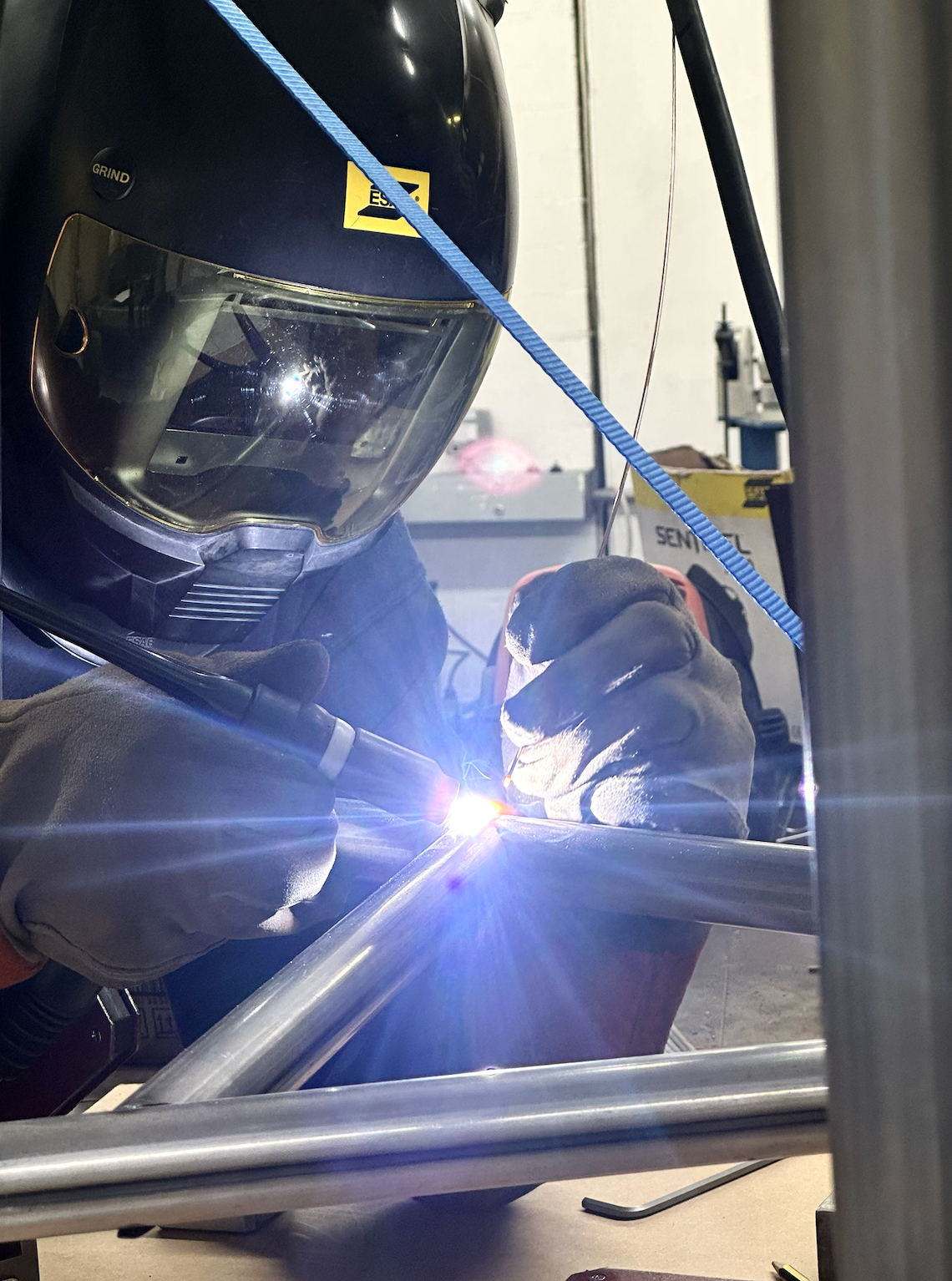
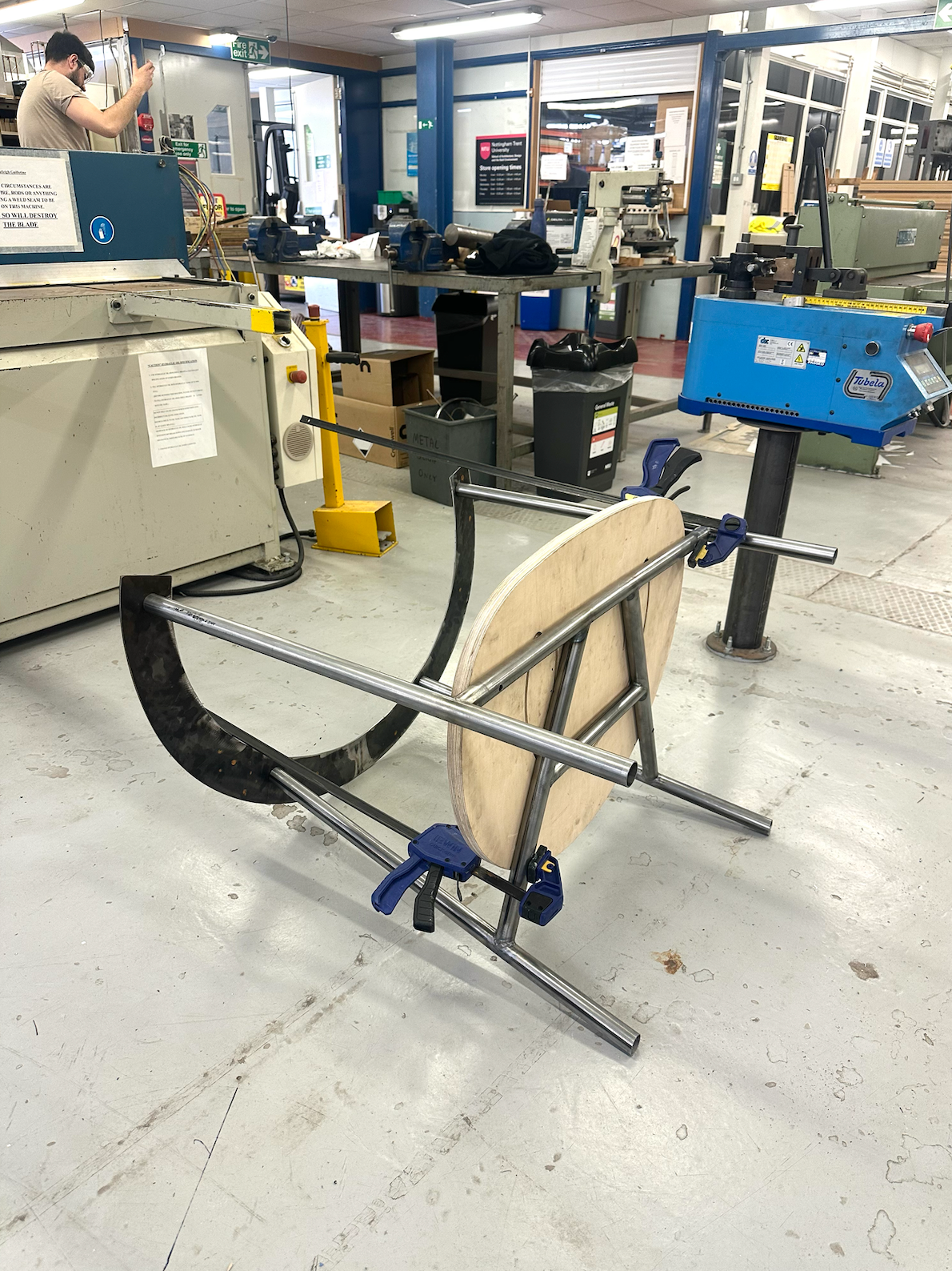
Welding was selected for the frame because an exposed structure leaves no room for adjustable fixings or covered junctions; the joints carry the load and are on show, so they needed to be permanent and clean. It also suits the contract setting, where a frame is moved, knocked and sat in daily; a welded junction cannot loosen over time the way a mechanical fixing can. Welds were sequenced around the frame to control heat distortion, keeping the back rail curve true without correction afterwards.
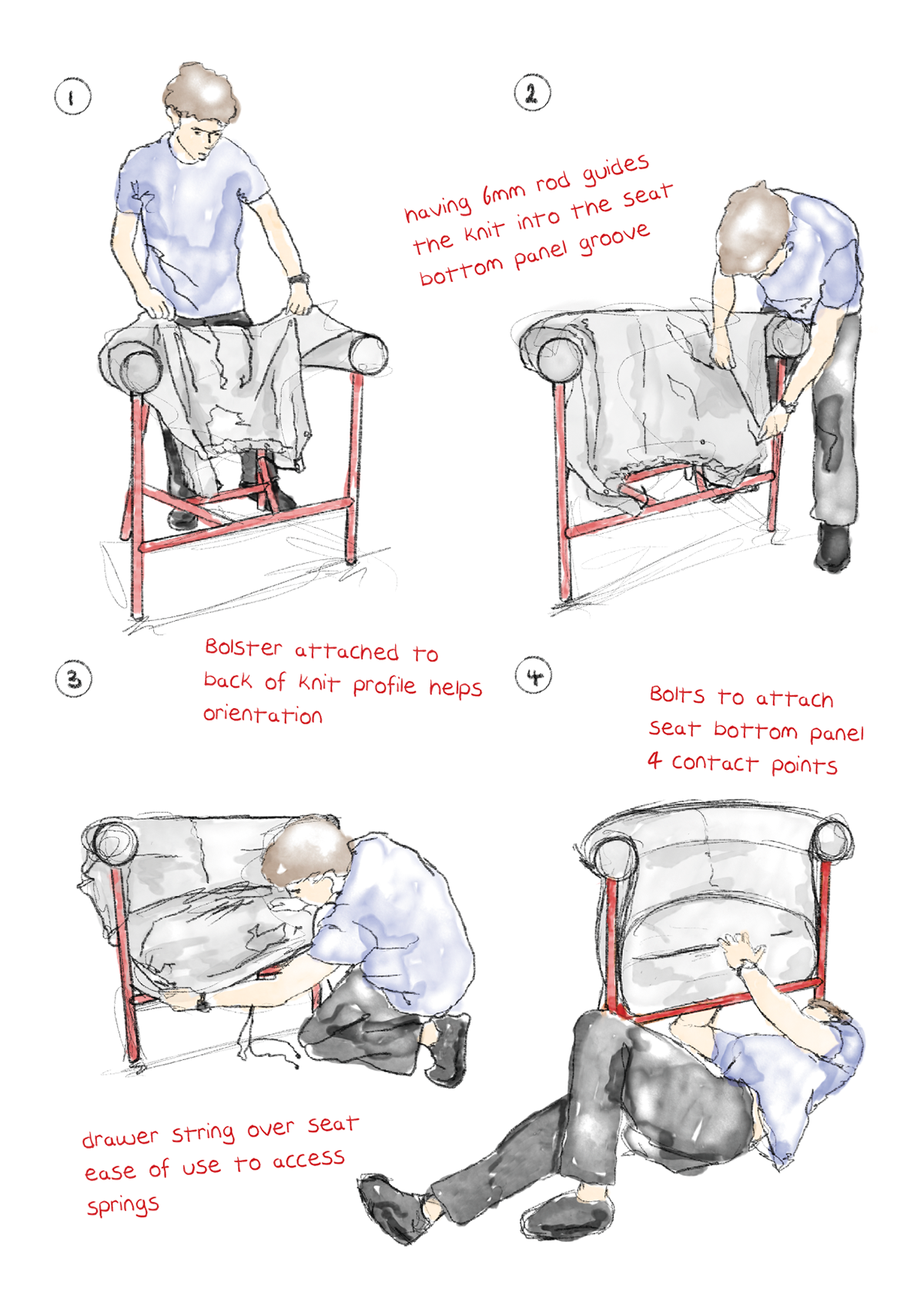
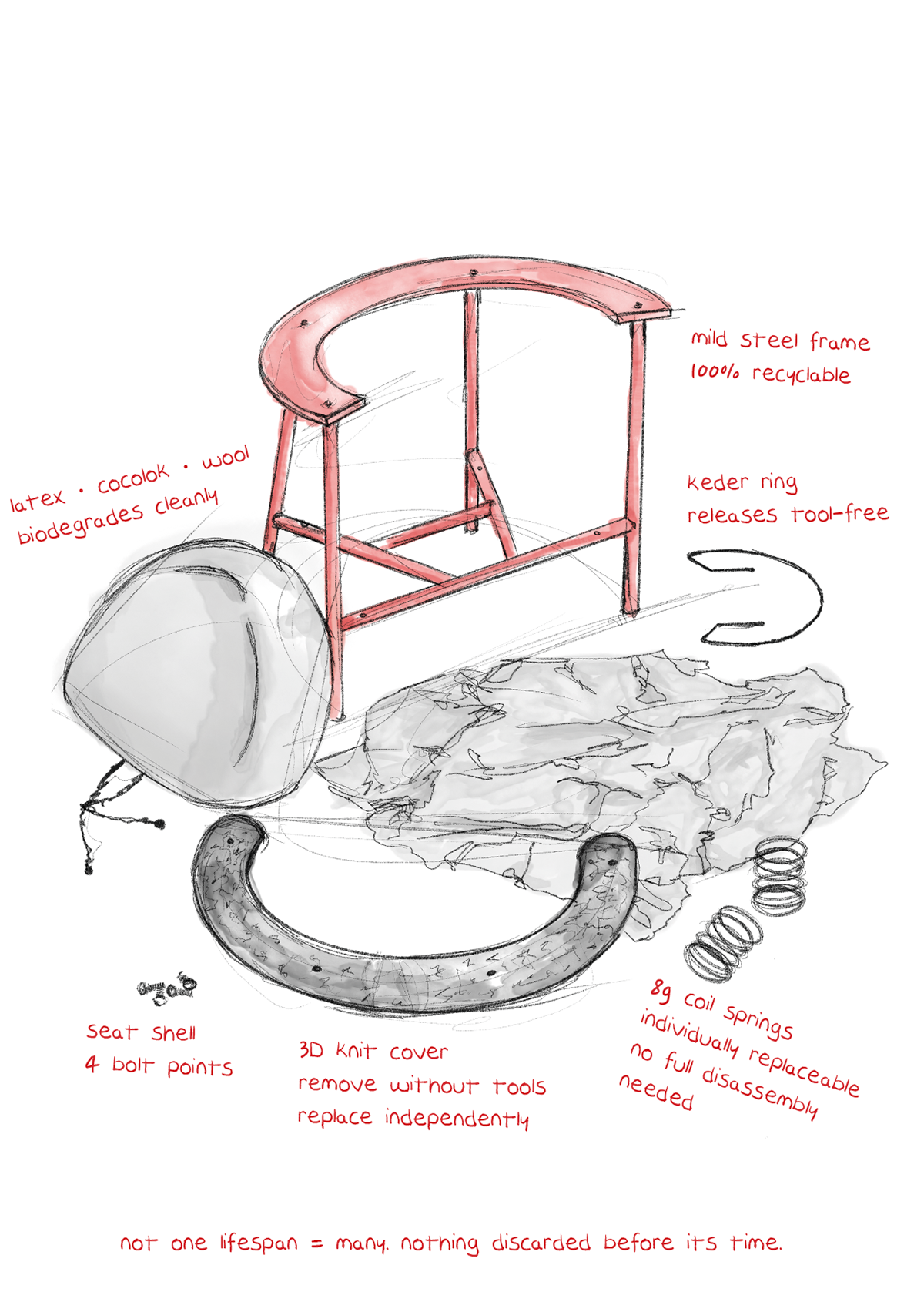
Disassembly was designed in from the start, not resolved at the end. The knit cover, the upholstery stack, the spring cluster, and the frame allows each component to have a different material life and be treated accordingly. The cover replaces itself without touching anything beneath it. The natural stack comes away cleanly without adhesives. The springs are accessible without dismantling the seat shell. Getting to this point required understanding each junction as a future repair point, not just a structural connection. The chair doesn't have one lifespan. It has several.
Not a material that claims to last forever; a system in which each component can be renewed without discarding the whole chair
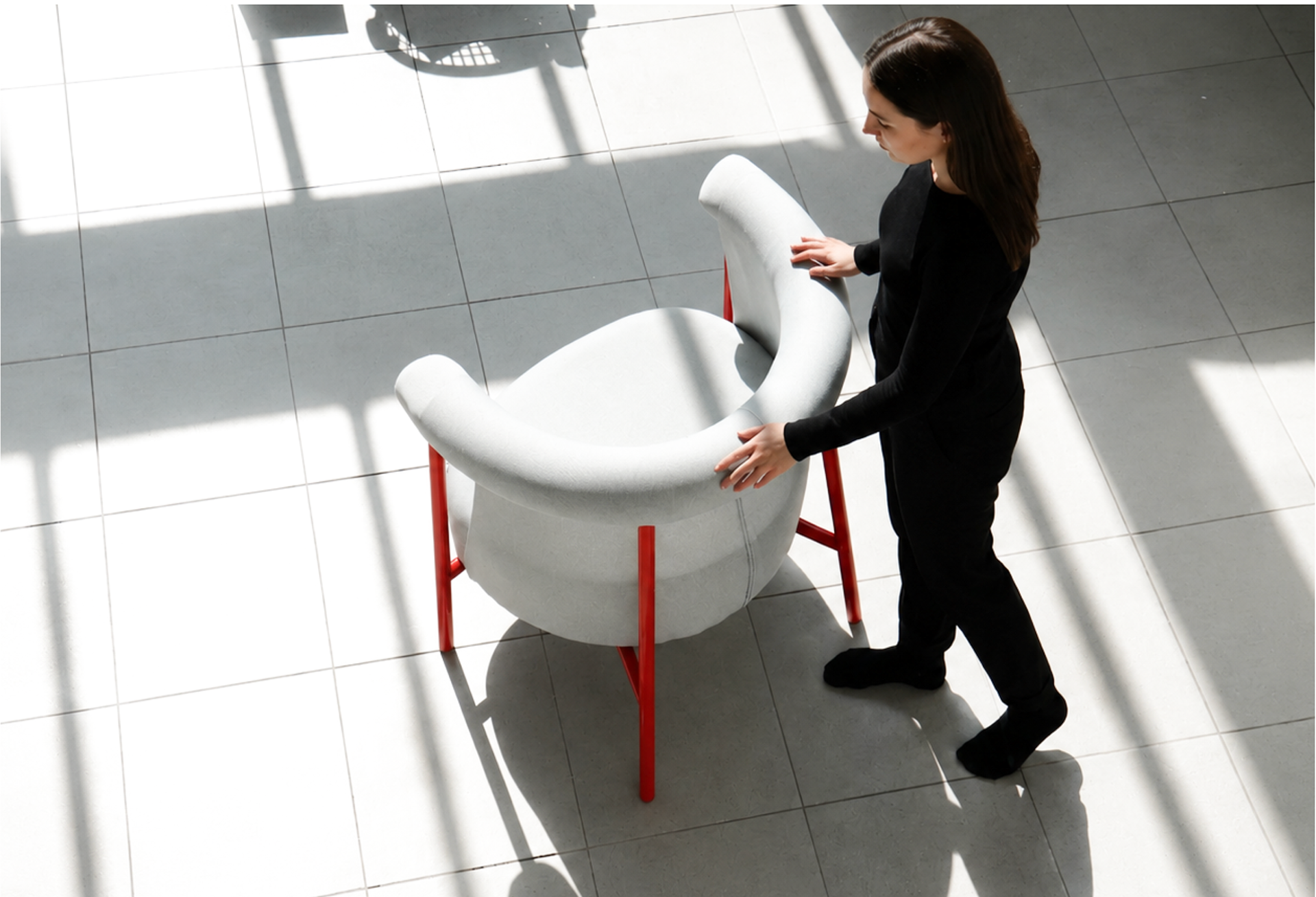
Photographed from above in natural light, the chair is shown in the kind of environment it was specified for: a bright, open contract interior rather than a studio set. The overhead angle exposes what most seating photography hides: the continuous back rail, the seam line running down the shell, and the way the seat sits within the frame rather than on top of it. The figure isn't posed sitting; she's moving the chair, a quiet reference to a product built around movement rather than stillness.
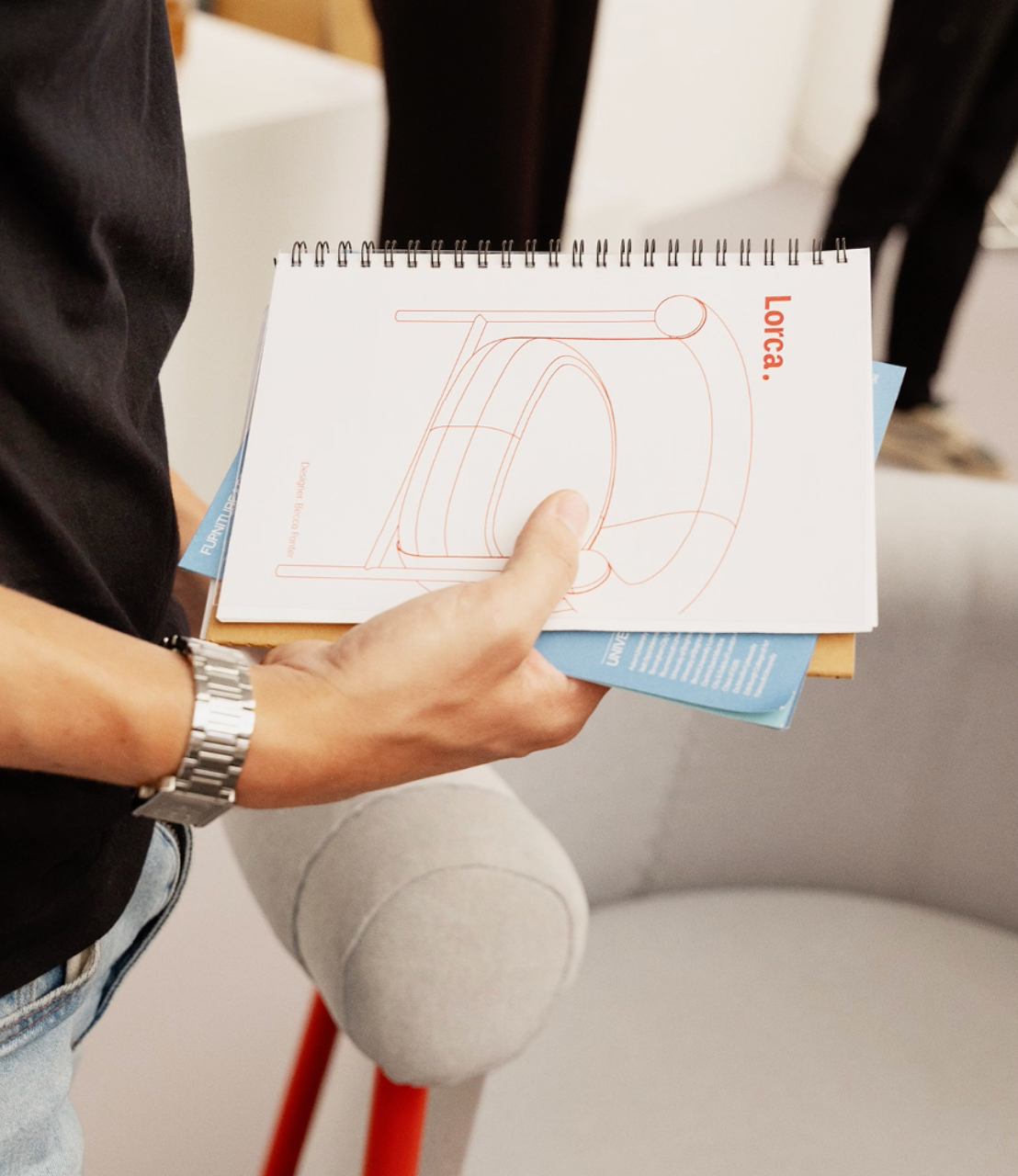
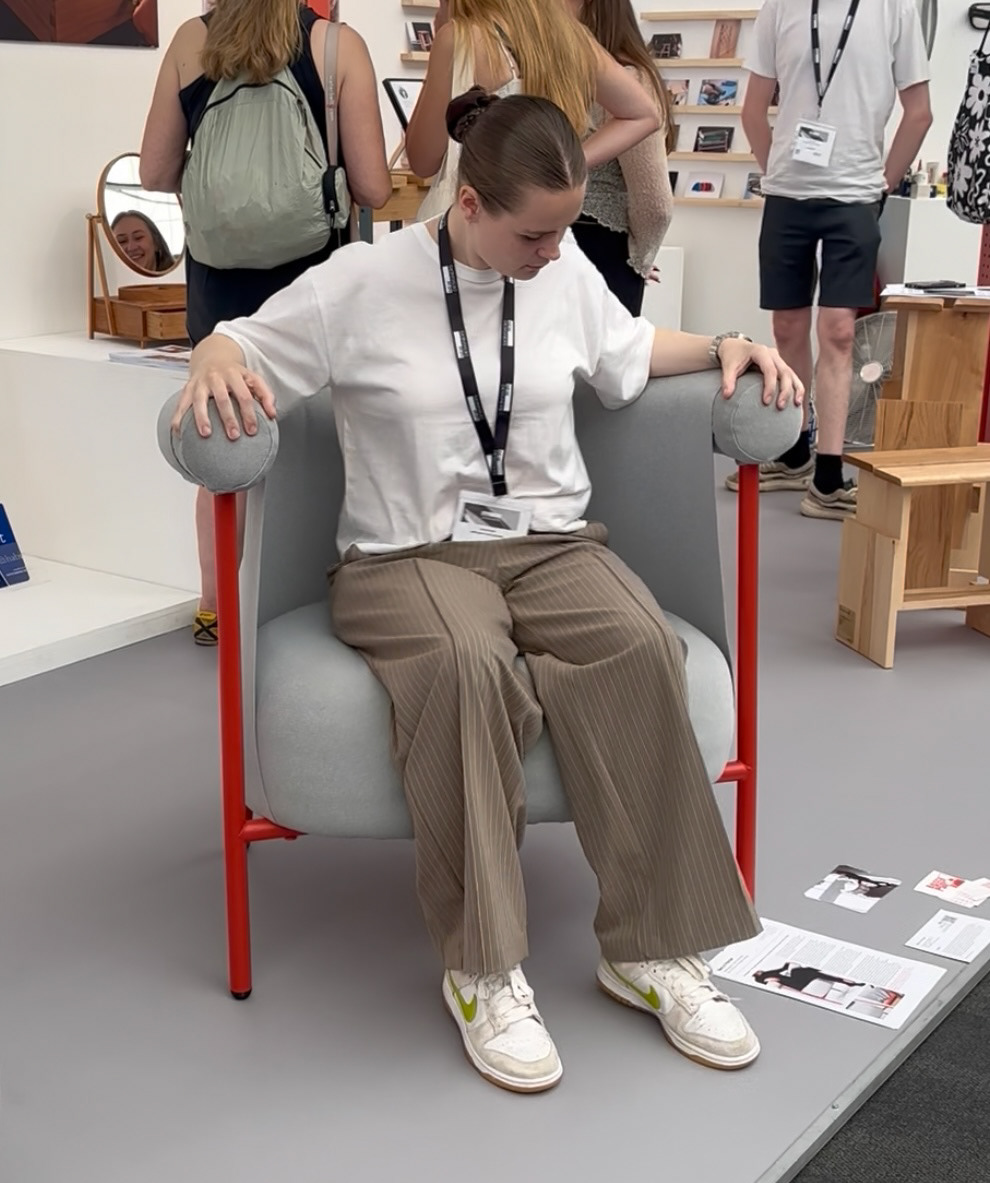
New Designers 2026
📸 New Designers 2026, TSC Marketing Team Photography
Click below to explore how Lorca was made...
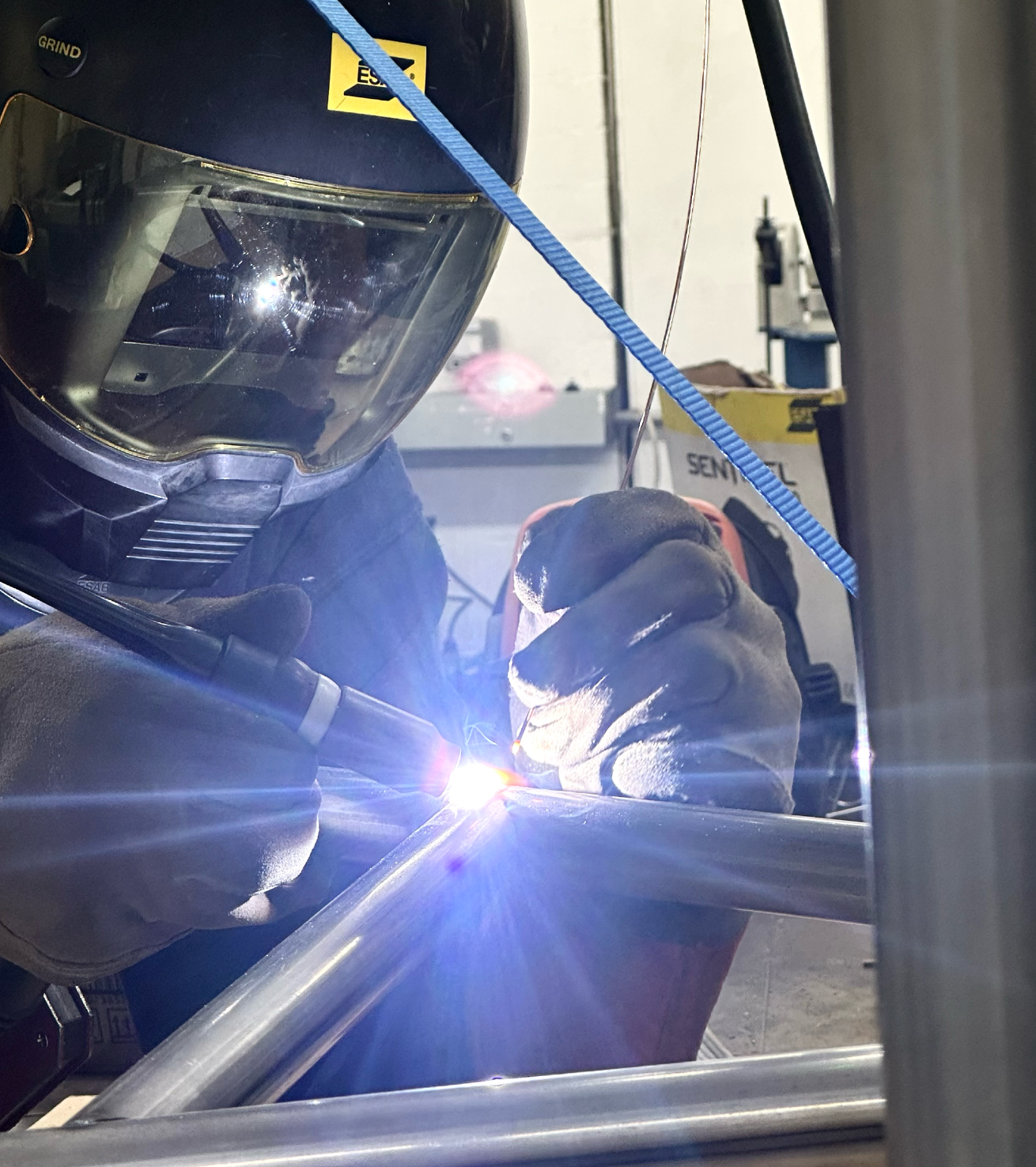
Manufacturing Process
Technical Drawings