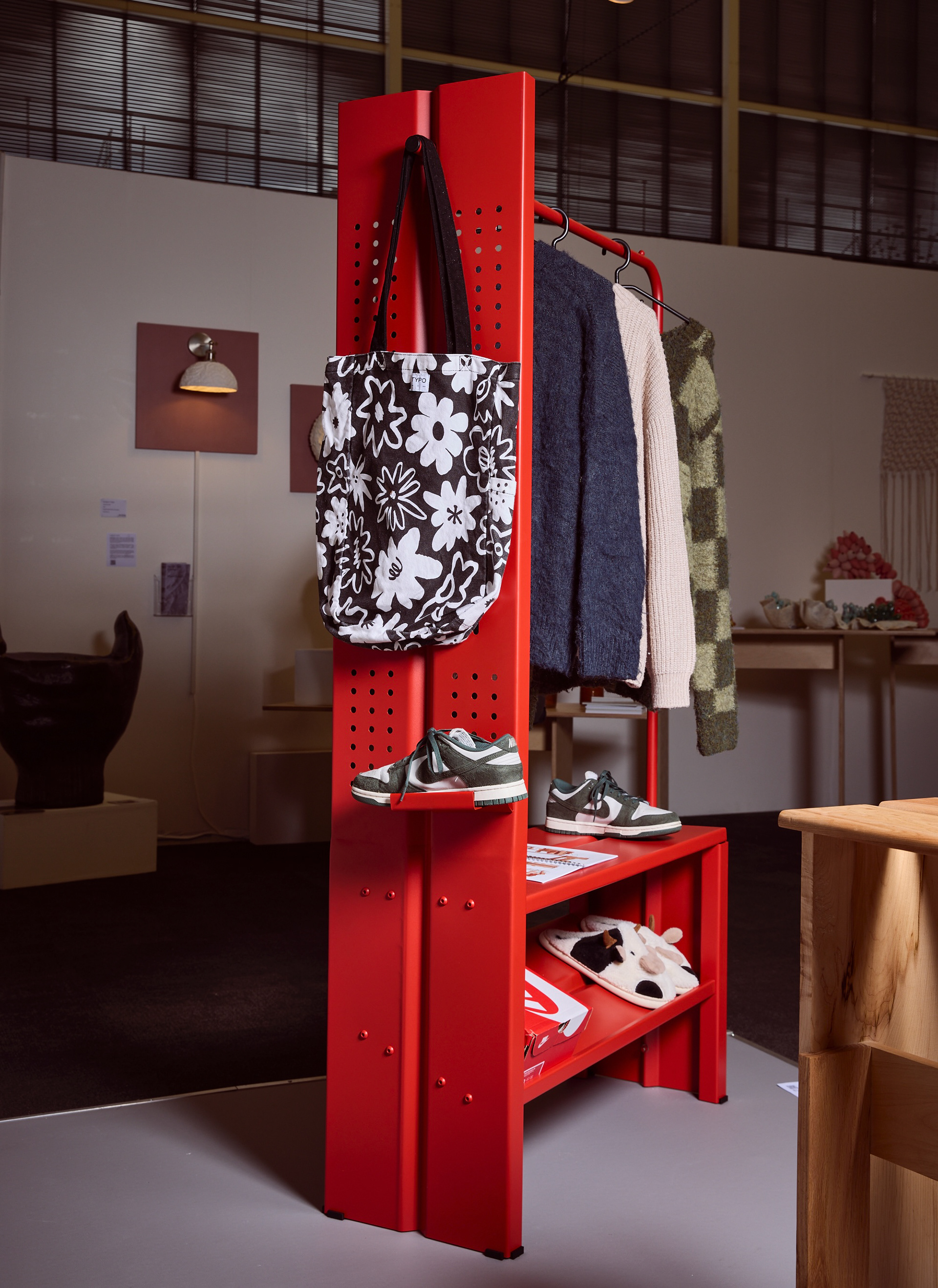
ReFrame Wardrobe is a collaboration between Habitat and Vinted, designed for compact living and built to challenge the disposable culture of flat pack furniture. With every joint visible and every component replaceable, it encourages repair, adaptation, and longterm ownership.
Crafted from durable powder coated sheet steel, the wardrobe uses precision folded components that assemble with nothing more than an Allen key; no specialist tools or complicated fixings required. Perforated metal panels add flexibility for custom storage while creating a clean backdrop for photographing clothes to resell on Vinted, transforming the wardrobe into both practical storage and a functional studio space.
Crafted from durable powder coated sheet steel, the wardrobe uses precision folded components that assemble with nothing more than an Allen key; no specialist tools or complicated fixings required. Perforated metal panels add flexibility for custom storage while creating a clean backdrop for photographing clothes to resell on Vinted, transforming the wardrobe into both practical storage and a functional studio space.
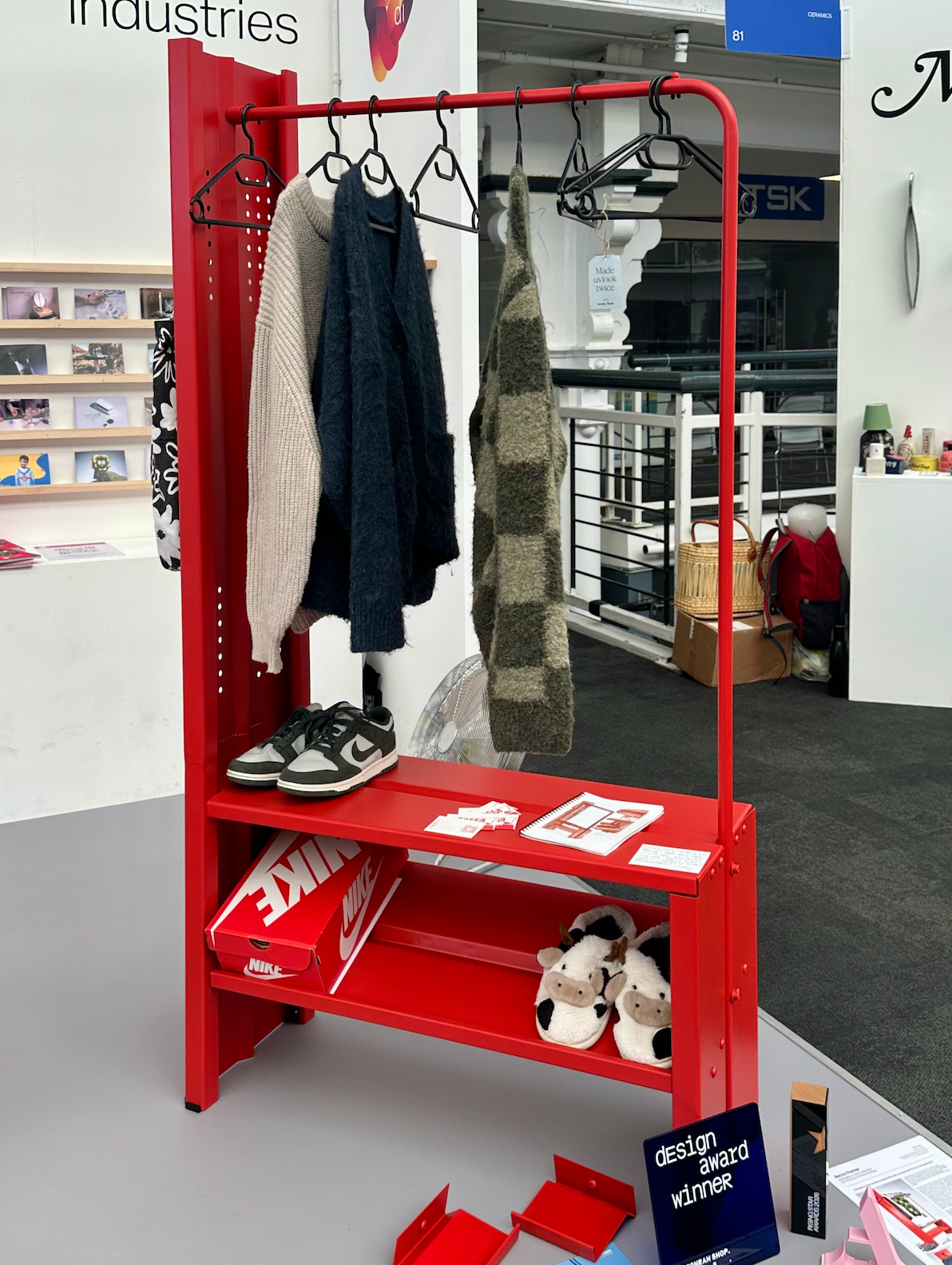
Student accommodation follows a familiar pattern: bed, desk, wardrobe. The wardrobe is almost always the largest piece in the room; and the least considered. A tall, sealed box that dominates the space while offering little flexibility or personality.
Primary research with students and accommodation managers kept coming back to the same thing: rooms feel cramped not because they're too small, but because the furniture is rigid, institutional, and designed to be replaced rather than repaired. In some accommodations, over a third of furniture is swapped out every year.
At the same time, the people living in these rooms are shopping on Vinted, moving frequently, and thinking carefully about what they own. The furniture they're being given doesn't reflect that at all.
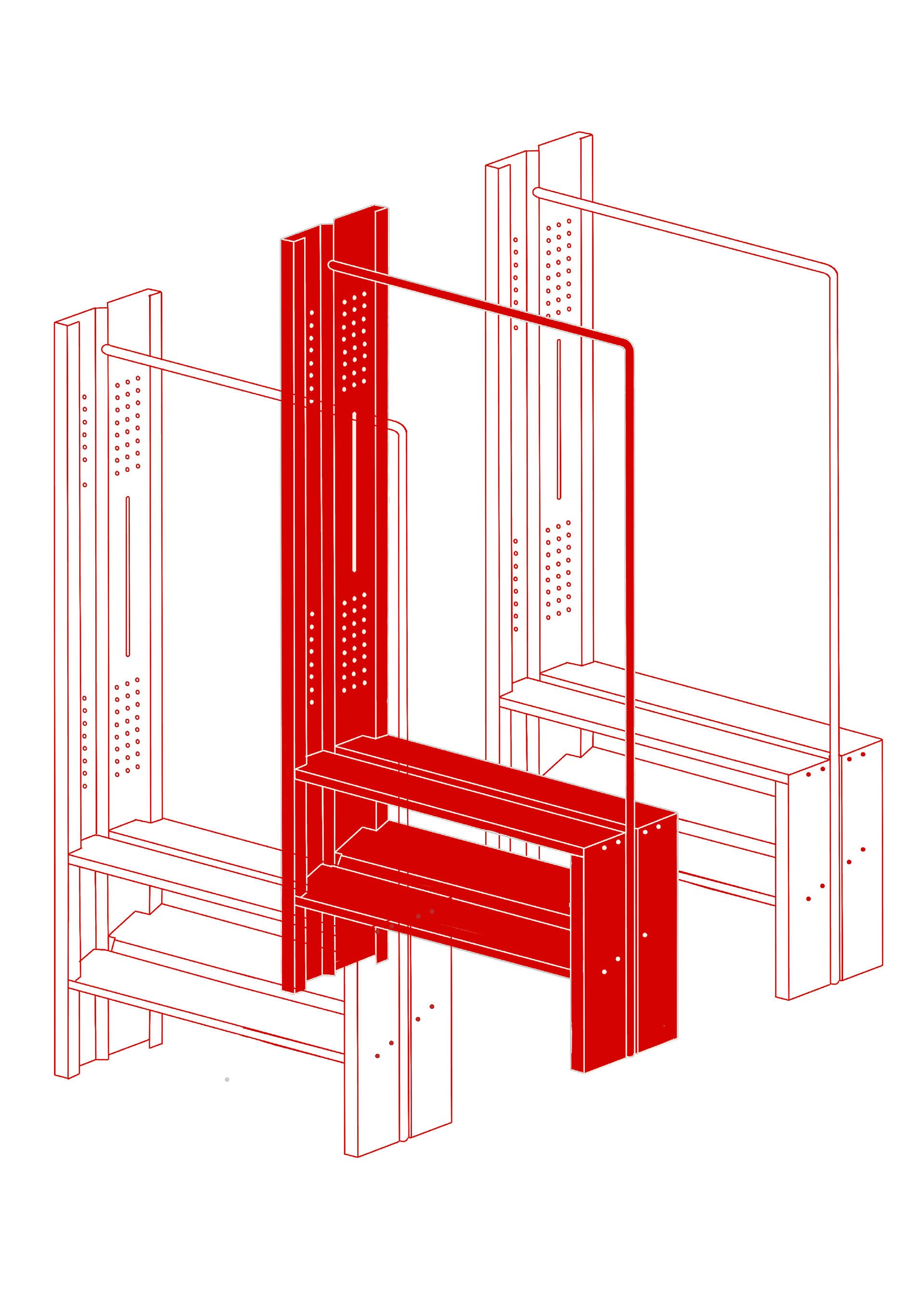
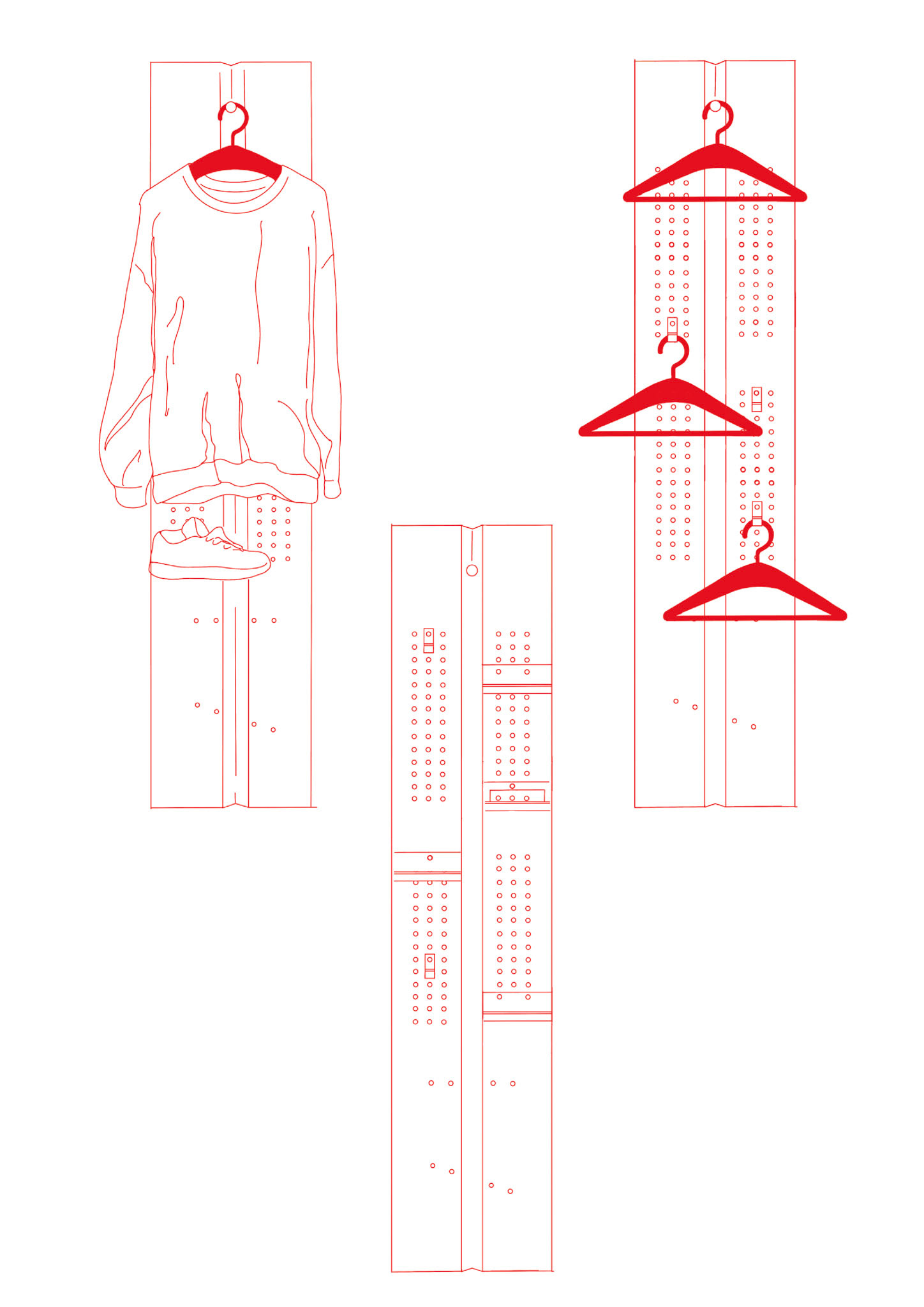
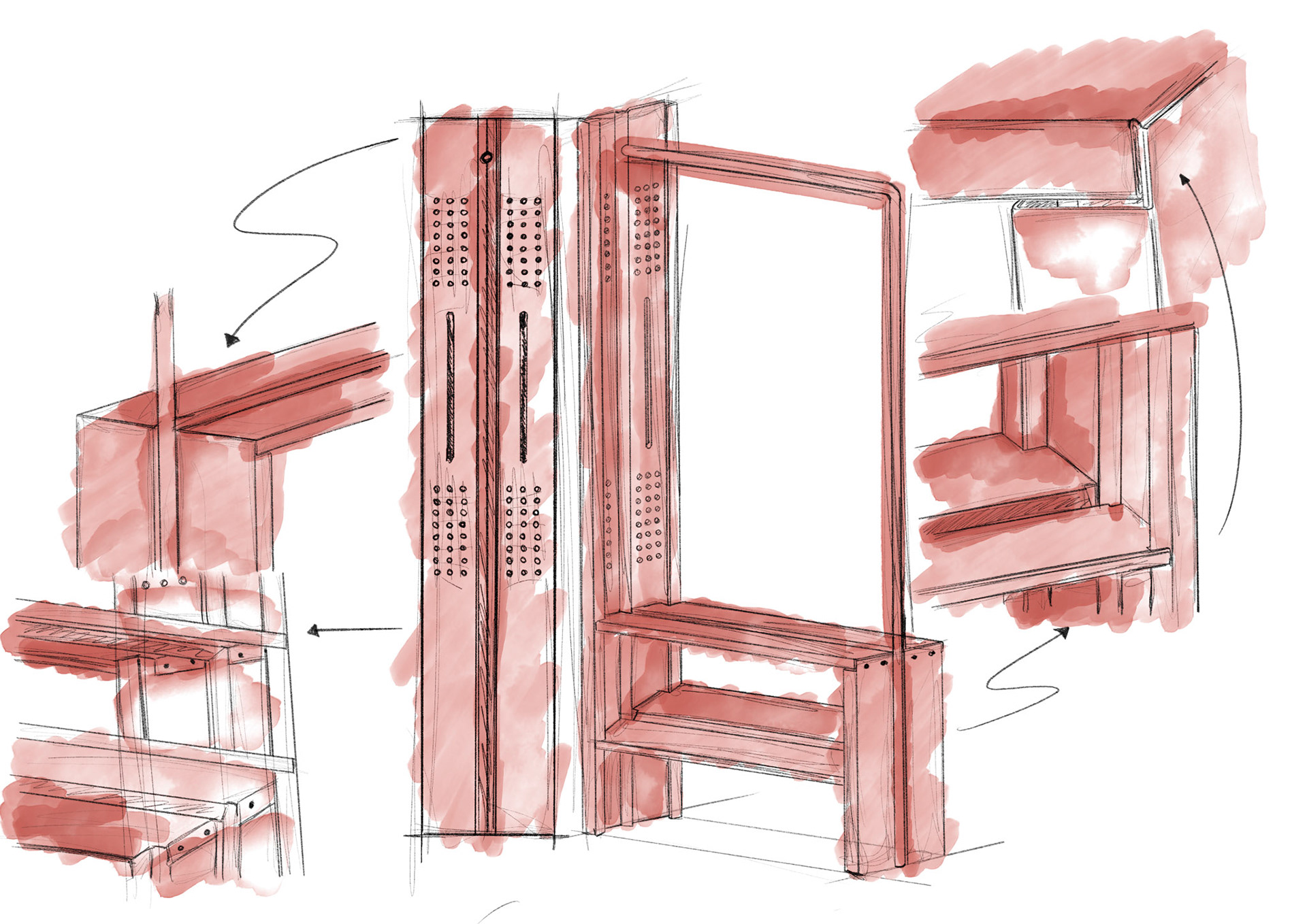
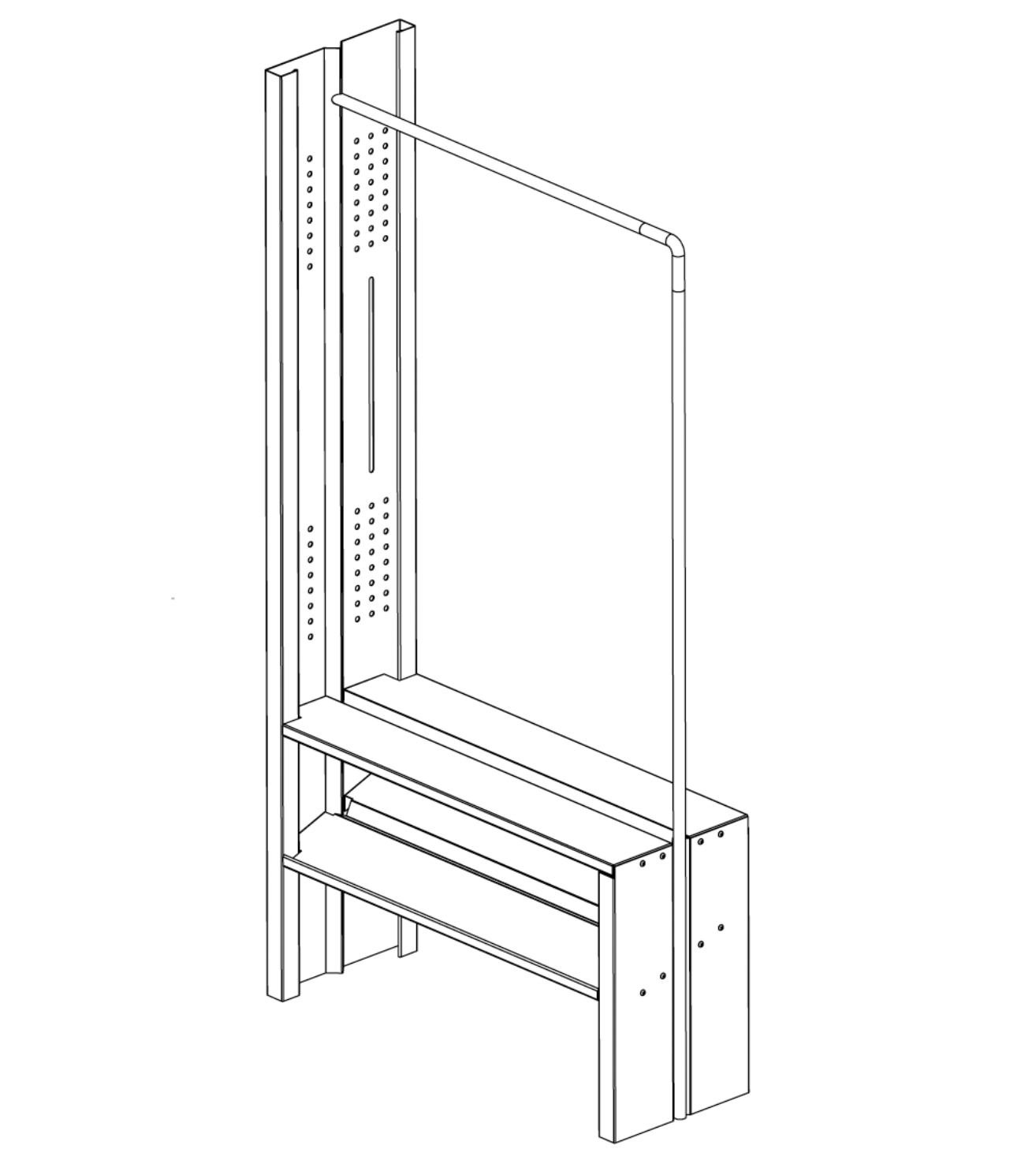
ReFrames becomes a configurable system. Each component is designed to work independently and in combination, so the wardrobe can grow or reduce with the user’s space and needs. The entire system assembles with one Allen key. All fixings are identical.
The perforated upright panels run the full height of the structure. Shelf positions are not fixed; the components clip and bolt into any perforation point along the upright, allowing the configuration to be entirely user defined and adjusted without dismantling the frame.
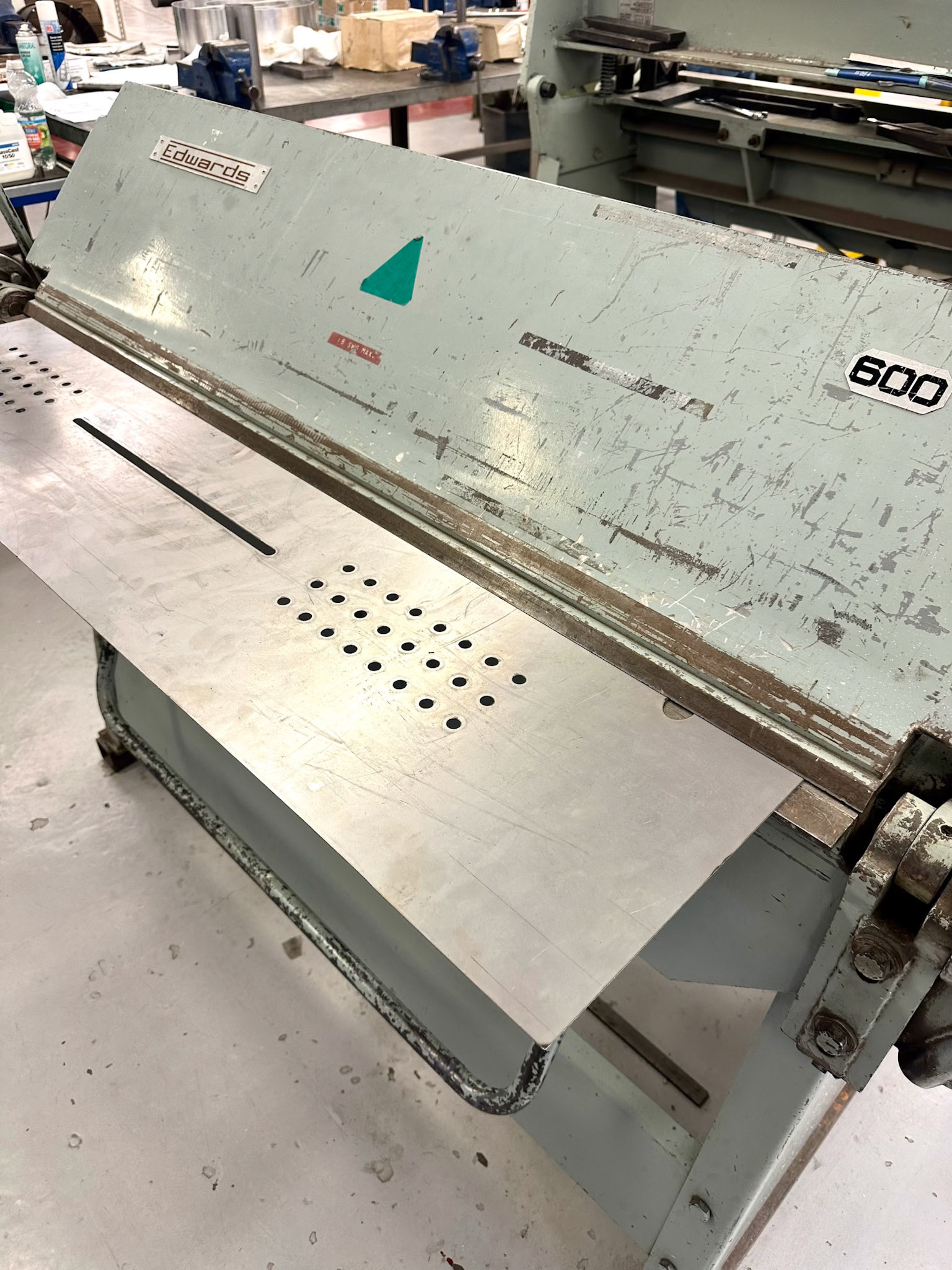
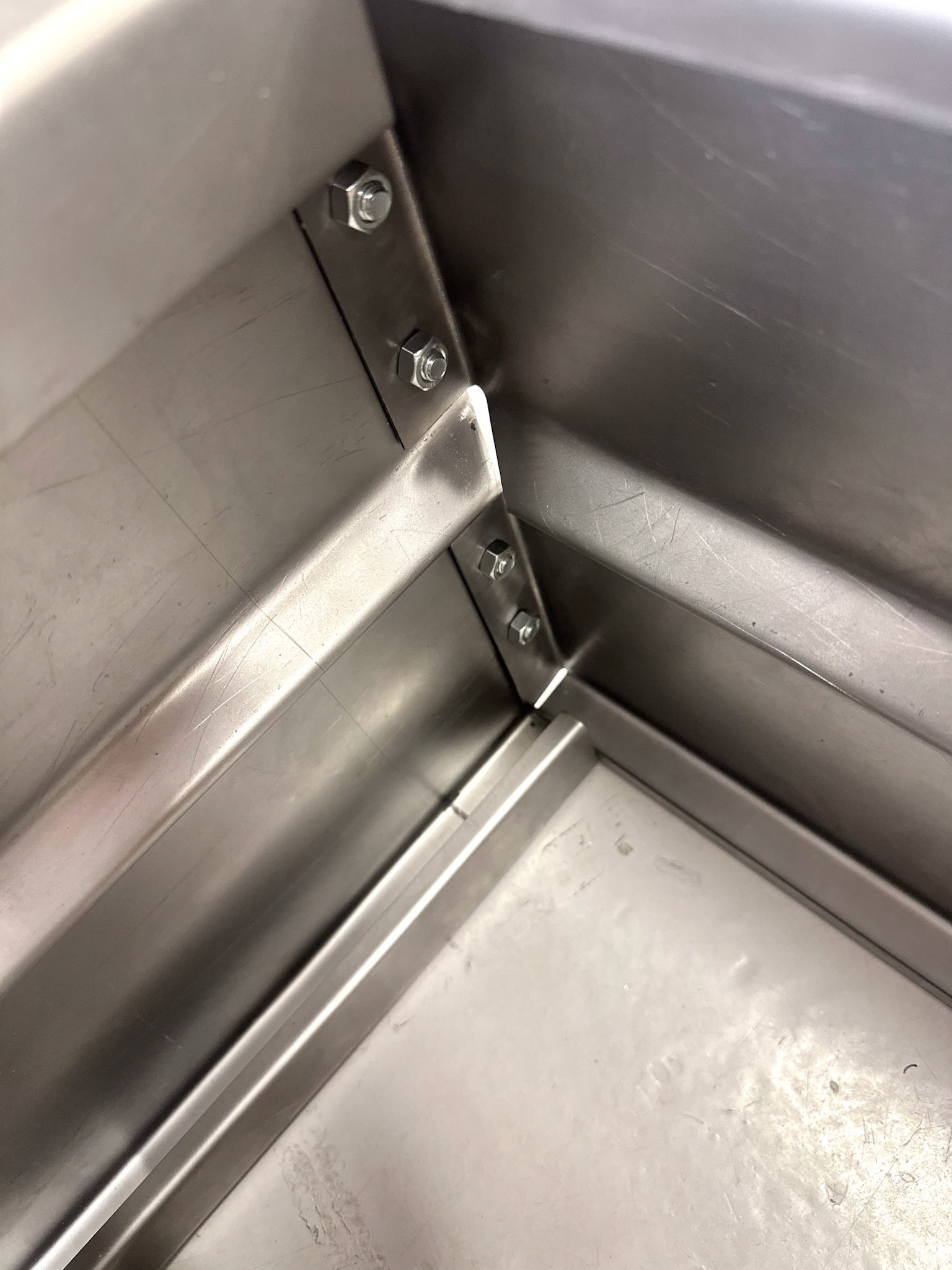
1.6 mm Mild Steel: Frame, Shelves, Rail All structural components share the same material, fibre laser cut and press braked to profile. One material stream means straightforward end of life recycling; steel is 100% recyclable at 25–30% of the energy of virgin production.
Powder Coat: Matte Red Electrostatically applied. Scratch and corrosion resistant, repairable and solvent free. Colour is part of the design language, not applied over it. Thickness (~60–80 microns) is factored into hole tolerances in CAD.
CHS Tube: Hanging rail circular hollow section mild steel has threaded inserts where it meets the upright and is seated in the V channel profile. Same material as the rest of the system.
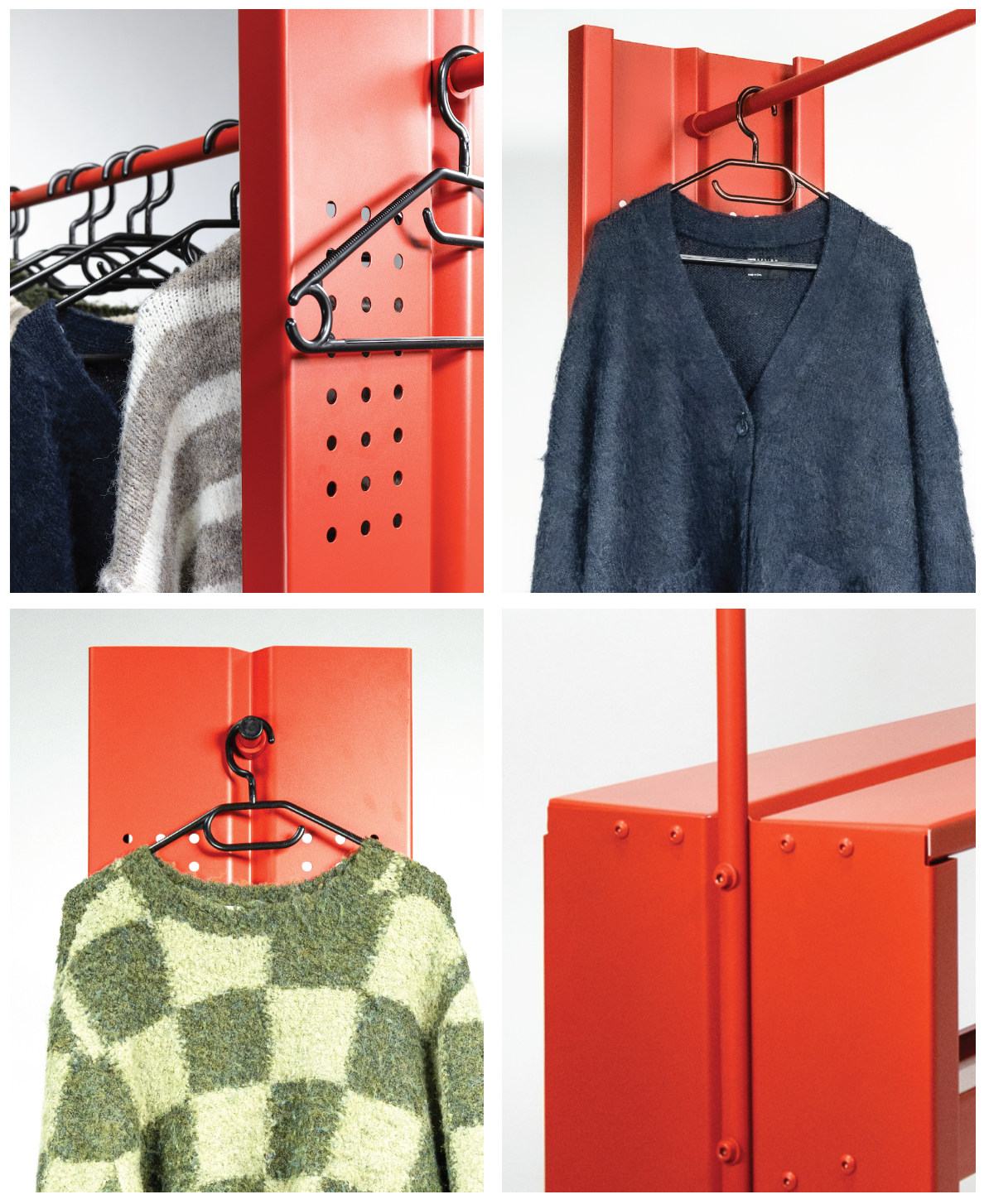
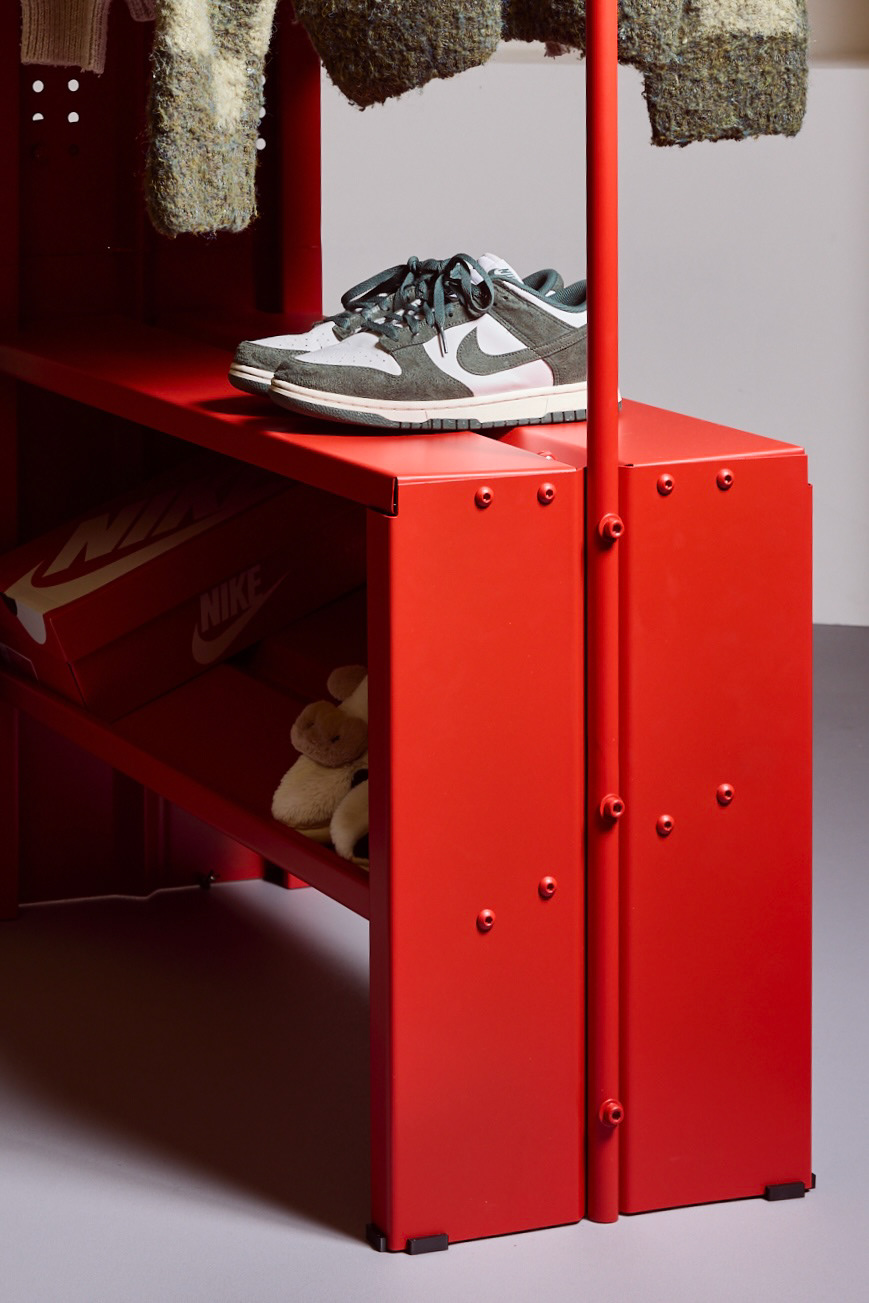
M8 Button Head Bolts: 16 identical fixings in stainless steel throughout, at 8.4 mm holes. The low profile button head keeps junctions clean and legible. No welding at assembly joints, meaning every fixing is individually accessible for repair or full disassembly at the end of life.

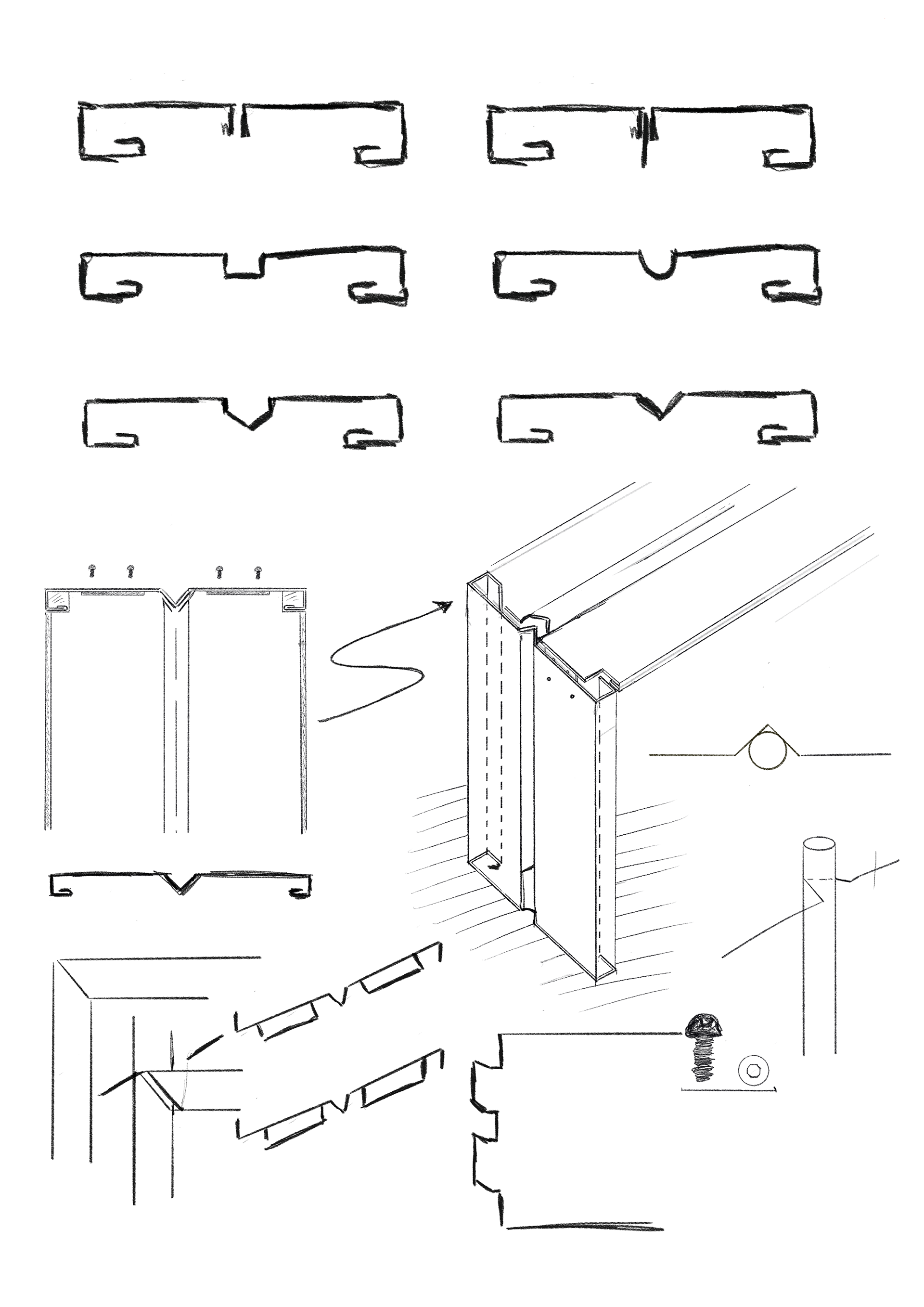
User research came first. Surveys of 32 students and interviews across 4 Nottingham accommodation providers pointed to the same thing: the wardrobe was the piece students most wanted to change, not just how it looked, but how it worked. Too heavy, too sealed, too permanent.
An open sheet metal structure that shows its construction rather than hiding it.
A 1:1 MDF model was built to test real decisions: shelf heights, rail position, perforation placement around bolt points. Users interacted with it before any metal was cut. Their feedback fixed the final shelf height, the narrow profile, and the need for clearer assembly.
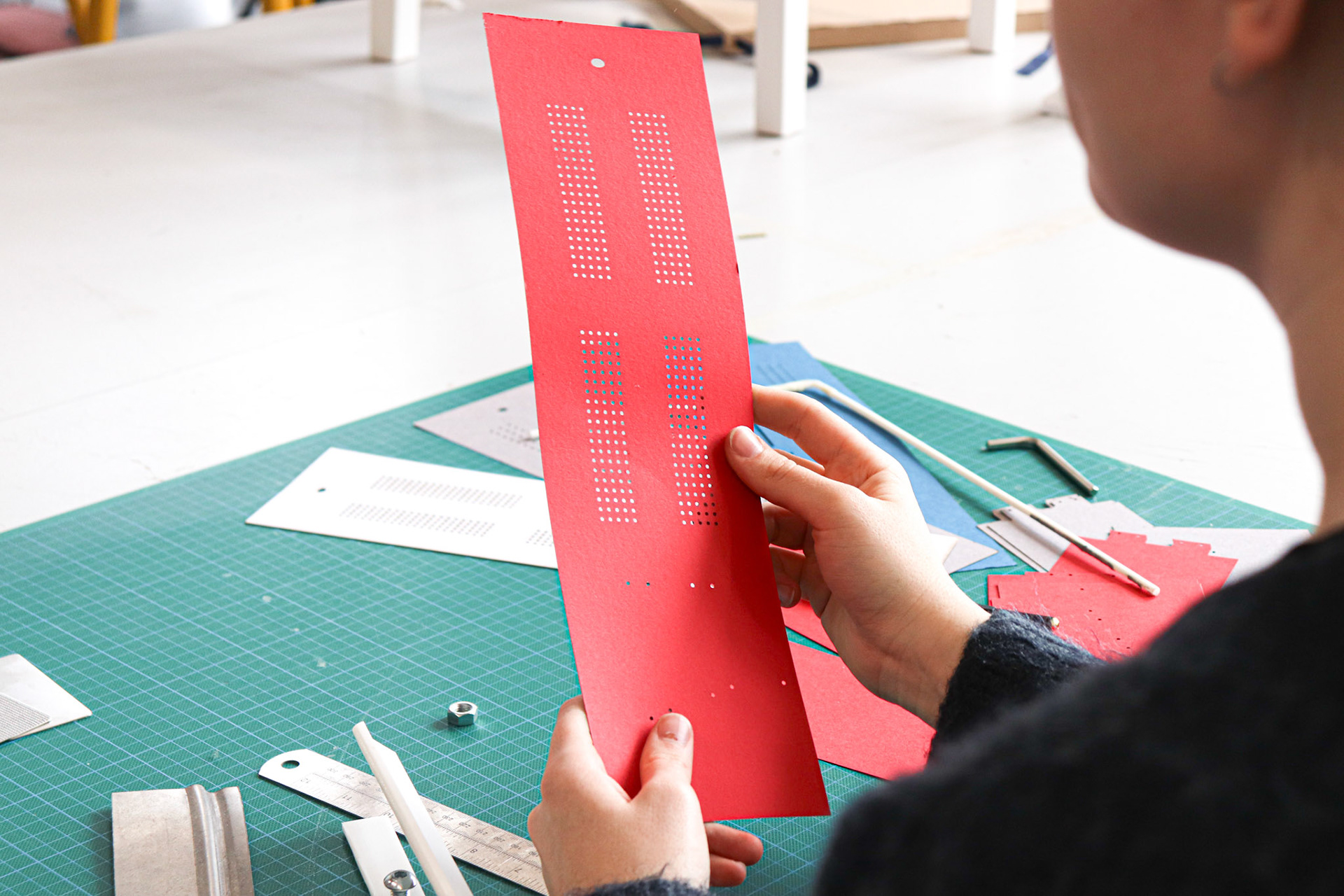
A 1:5 card model cut from SolidWorks DXF files tested tolerances cheaply. It confirmed the tab and slot system was stronger than expected and flagged that the nesting layout needed reworking to reduce sheet waste.
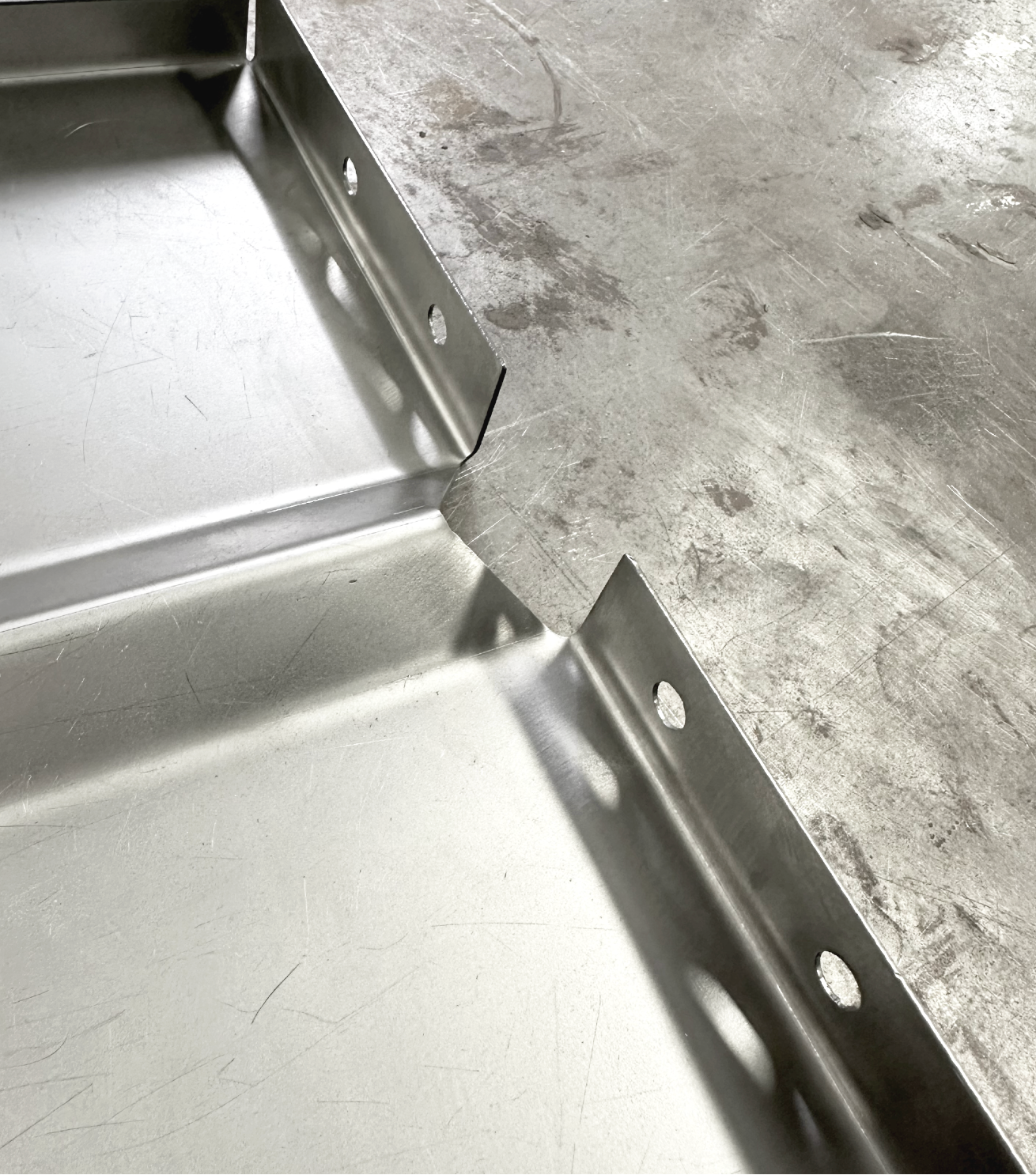
The steel wardrobe was waterjet cut, press braked, deburred, and assembled in three days. Each mistake was specific: the left upright needed overbending for spring back, the bottom shelf had to be reoriented because paper symmetry doesn't survive sheet metal, and dropping from 1.6 mm to 1.2 mm steel cut weight without losing integrity.
The open wardrobe category is underserved. Habitat’s current range offers one semi open unit, which reads as a stripped back version of a traditional wardrobe rather than a genuine rethink. No product in the range addresses the renter’s specific reality: a space that is temporarily occupied, furniture that must move with the person, and a market that increasingly trades clothes rather than simply storing them.
ReFrame fills that gap with a commercial argument. At a retail price of £199 on a manufacturing cost of £94.07, the product delivers a 52.7% gross margin. At £249 or £299, the margin rises to 62% and 68%, respectively. Repeat orders eliminate the £20 per unit tooling amortisation entirely, boosting margins on every subsequent production run.
The Vinted collaboration is not cosmetic; it makes a distribution argument. Vinted’s user base is the exact demographic this product is designed for: renters who buy and sell consciously, live in small transitional spaces, and make decisions based on portability and longevity alongside aesthetics. The perforated panel that allows shelf adjustment is the same panel that creates a clean backdrop for photographing clothes to sell. ReFrame becomes the natural companion to a generation that treats its wardrobe as a living, circulating collection rather than a static store.
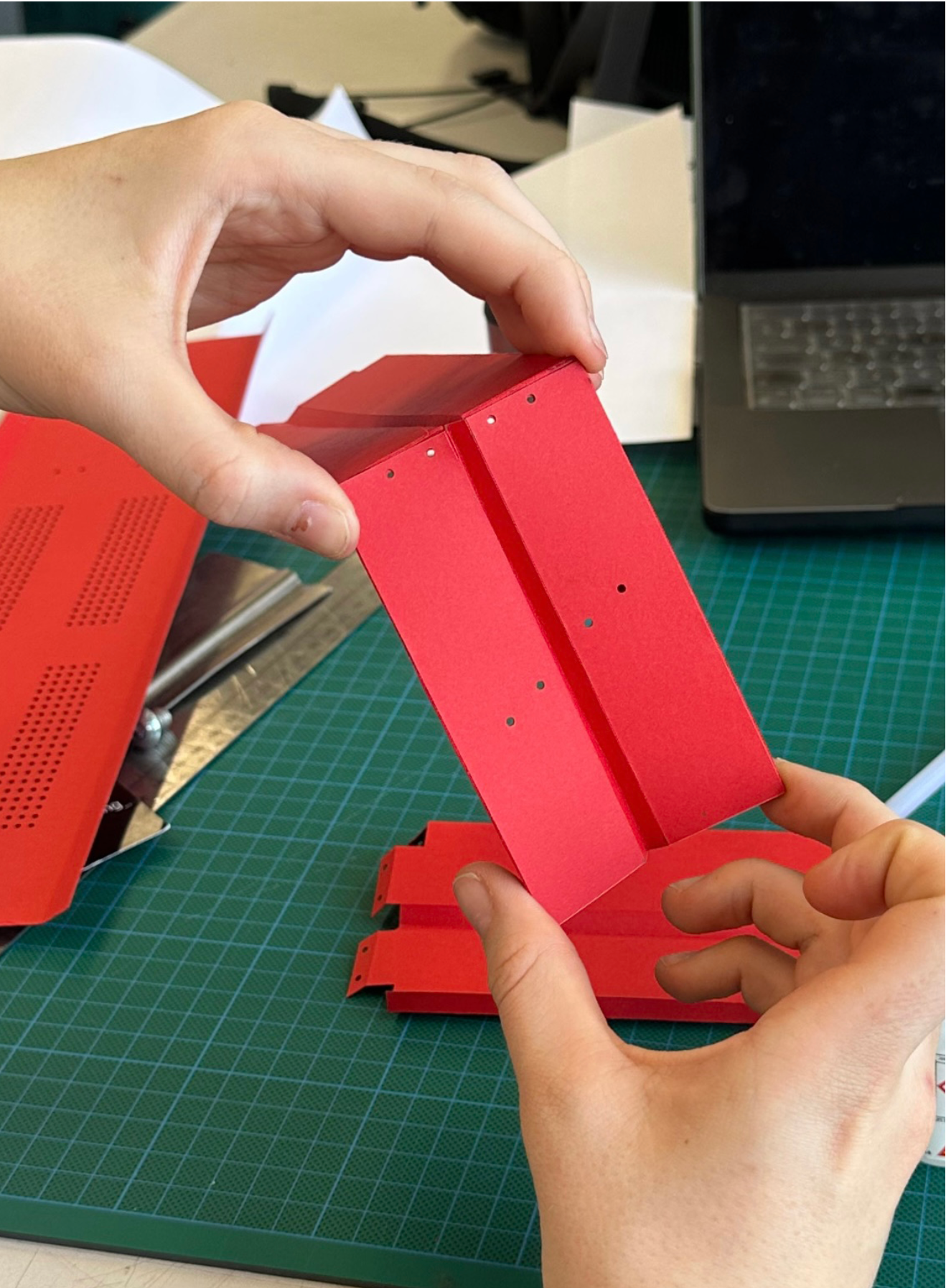
Every component is produced from a single 2500 × 1250 mm sheet of 1.6 mm mild steel; fibre laser cut and press braked to tolerance. The process is low tooling, flat packable, and designed for manufacture in China with a landed UK cost of £94.07 per unit.
Manufacturing cost £76.80 + Landed cost £17.27 = £94.07 total production cost
All components nest flat into a single carton on a standard pallet.
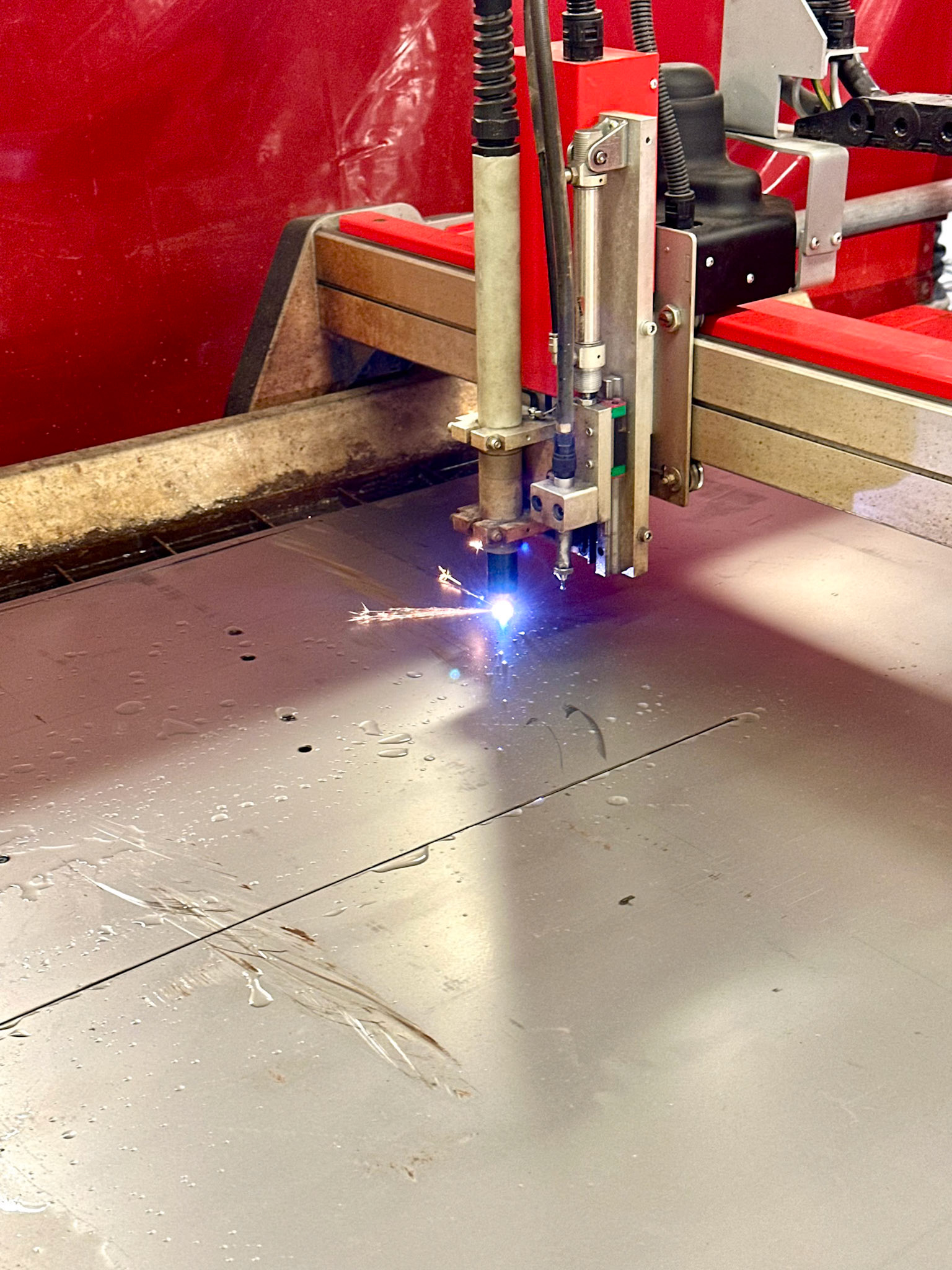
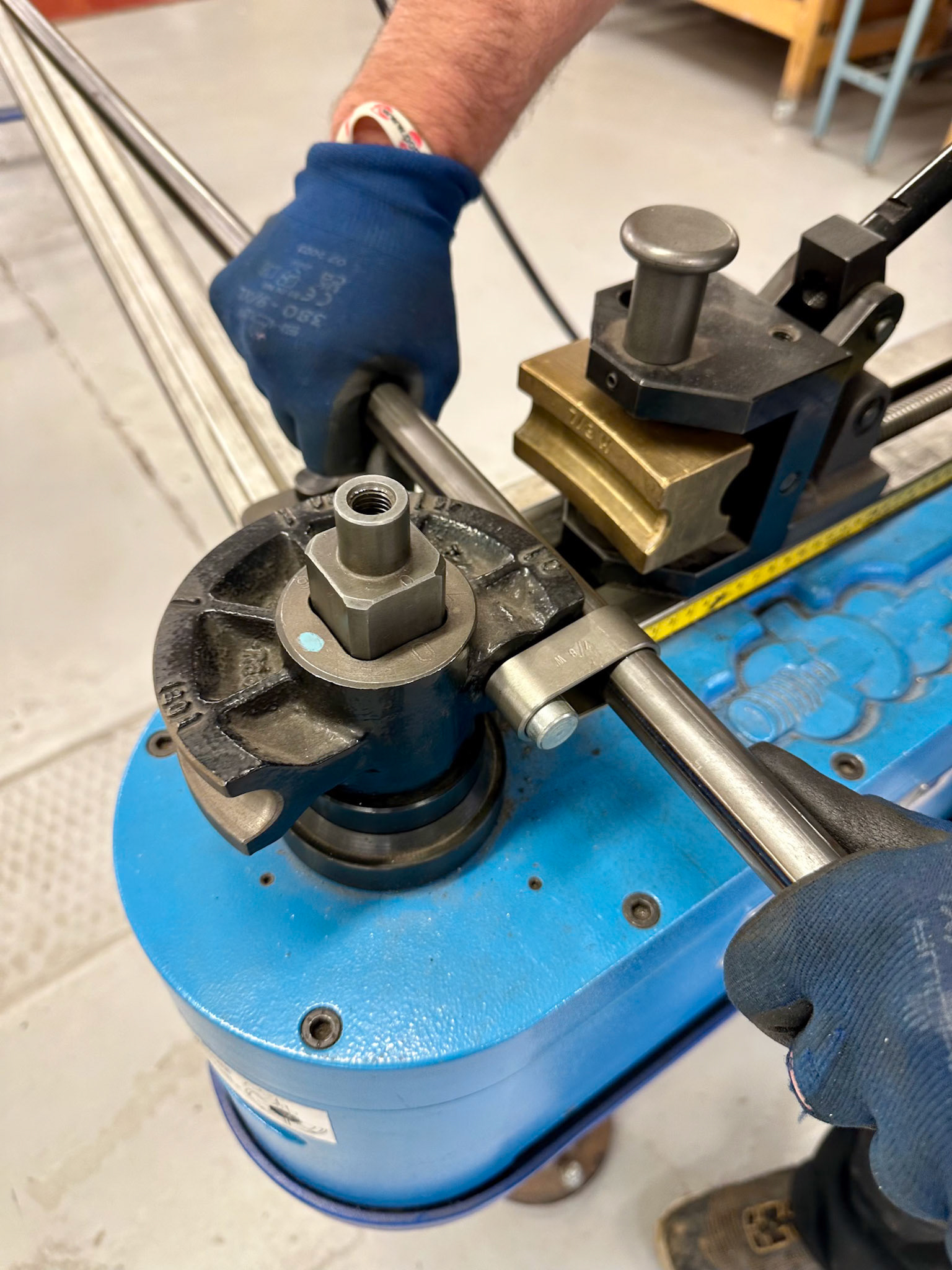
Every component is fibre laser cut from a single sheet, nested to minimise waste and keep everything in one material stream. Panels are folded on a CNC press brake, over-bent to compensate for spring back — a dimension that looks right on screen has to actually be right in steel. Edges are deburred and gaps held to 2 mm, safe to touch anywhere, not just the front face.
The matte red powder coat is cured at 180°C, its thickness factored into the hole tolerances — colour as design language, not decoration. The whole system flat-packs and assembles with 16 identical M8 bolts; assembly order doesn't matter, and every fixing is individually accessible for repair or full disassembly at the end of life.
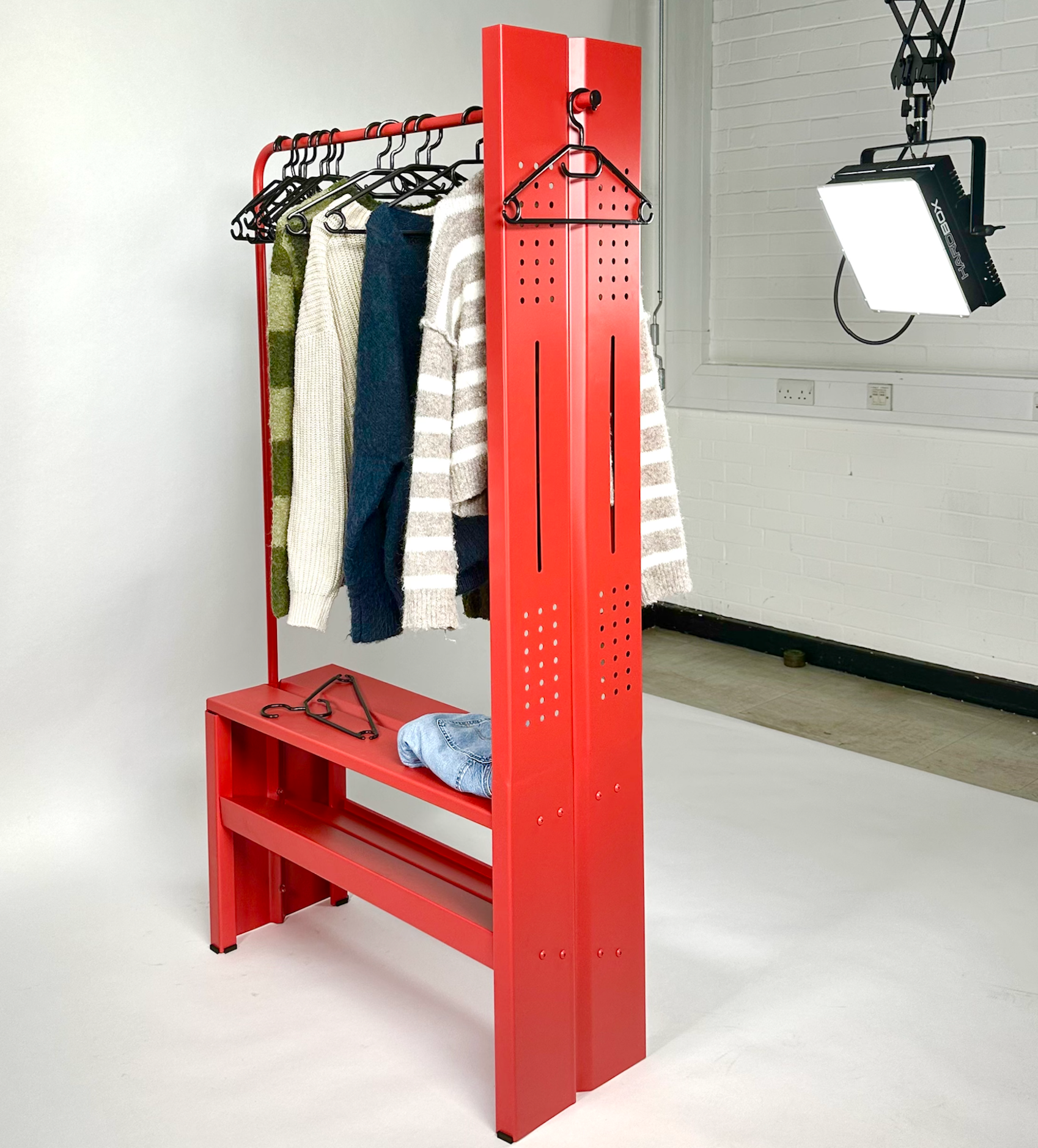
The photography was planned the same way a retailer would shoot it. The wide shot needed to work as a product page image, so the wardrobe was photographed in the studio fully assembled, holding a realistic amount of clothing. People buying furniture like this judge proportion first, so it's never styled half empty to look sculptural.
The close ups pick out the things a customer wouldn't see until the box arrived. Hangers against the perforated panel, the folded edges, the bolted joints. Because the construction is the design, the details had to hold up to being photographed this close. The set was also shot with reuse in mind, so the same images work as a retail hero shot, social crops and press material without needing another shoot.
Animation showing the wardrobe in its intended context for Habitat: a renter photographing clothes to list on Vinted, using the perforated panel as a clean backdrop. Storage and studio in the same footprint; the product working the way the collaboration intended.
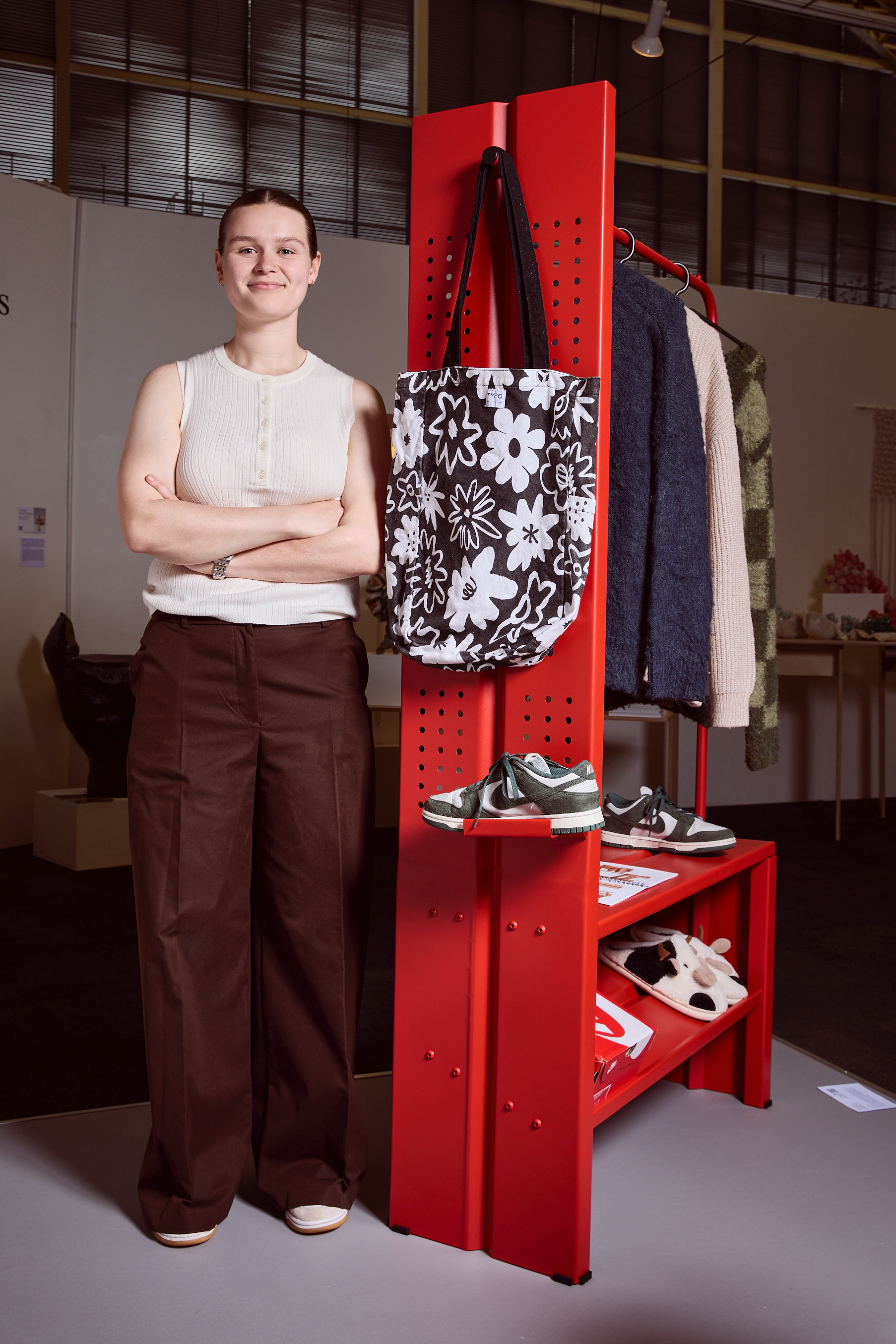
New Designers 2026
📸 New Designers 2026, Mark Cocksedge Photography
Click below to explore how ReFrame was made...
Manufacturing Process
Technical Drawings